[written down by Johana Passerin]
“And what happens next?” asked Loverd, who watched the events in the adjacent room through the open door with amusement. The animosity between Fox and the raven was something so primitive that it actually amused him. At the same time, he saw that both animals were animals only in part. Both spoke, and he gradually understood that they played an important role in this tangled story, with Shard apparently being an unwitting part of some larger flock.
“I suggest we go ask around for that professor. On the way, I’ll think of some pretext to request a sample of the elixir. And we must track down what happened to Talantius,” said Klaes.
“And who is Talantius, anyway?” asked Loverd.
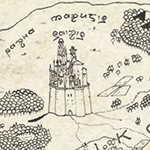
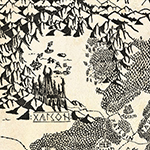
“He was a mage in the city of Maghon. He summoned us—more precisely, he summoned representatives of our lands, and it happened to be us, namely me, Jarn, and Al-Raqím, who were sent to him. That last friend is already dead. Jarn traveled with us all the way here, but recently left to pursue some other life mission—that is, if it was still Jarn, because something infected him along the way and changed his personality. Lo and behold, so out of the original trio, I am actually the only one left. Talantius summoned us, and each of us brought him some seemingly insignificant substance. He concocted the Elixir from it. And then he sent us north and took to the skies with his tower.”
Loverd nodded appreciatively. “We will also need a pretext for how we know about the messenger in the dungeons.”
“We could pin that on the raven chick,” Klaes suggested. Loverd nodded and replied in a whisper: “I think the rulers of Xalgon must have noticed Mirk’s arrival.”
“He claimed he was attracted by the Elixir!” Klaes emphasized. For a while longer they debated whether and how the flock Mirk and its Shard were connected to the New Age, and how to use (or not use) these new facts in their search for the messenger and request for the Elixir.
Klaes called to Fox, and they set off to the Department of Transdimensional Studies to find Professor Lugašír. Loverd had recognition signals for various potential contacts. The signal consisted of certain phrases woven into ordinary conversation. In Lugašír’s case, it was the phrase dramatic turn. They walked through corridors where, instead of nameplates, a bust stood by every door. Neither Loverd nor Klaes knew what Lugašír looked like. Eventually, they addressed a passing Vezan woman and asked for directions. She willingly advised them. When they knocked, a young man opened the door, whose bust was not present outside the door. He welcomed them with a bow: “Welcome to Professor Lugašír’s study.”
“We would like to speak with him,” Klaes requested a meeting, placing his Yllerian calling card into his hand. Before the assistant returned, they examined the anteroom decorated with globes; dominating everything was a scale model of the Horologium on a pedestal in the center of the room, illuminated by a chandelier of strictly non-Euclidean shape. Along the walls stood shelves filled with books and folios.
Then the double doors opened and a voice resounded: “Welcome, esteemed guests. What can I do for you? My name is Lugašír, Professor Lugašír.”
“Magister Klaes Ravit, and this is my guide Mezhen Kyun,” Klaes greeted politely and humbly. Lugašír was a tall demon, two swords high, with pitch-black skin that resembled the surface of cooled lava and eyes red as fresh lava.
“Mezhen Kyun, such a typical name,” Lugašír smiled faintly. Indeed, it was the most ordinary and common name for an Undead in Xalgon.
“I apologize for taking up your precious time. A few days ago, we brought the Elixir to Xalgon. There has been a dramatic turn in our understanding when we discovered that this substance might also affect the perception of time. And since that is your expertise, that is why we came to you,” Klaes continued.
The demon grew attentive at those words. He raised an eyebrow and his eyes blazed with golden-red light. With an elegant gesture, he motioned to the assistant to disappear and close the door behind him. Then he turned to one of the globes and placed his hands on it.
“What do you need, then?” he prompted them.

“We were contacted by our mutual acquaintance. She expressed a wish that we try to meet with a messenger who was detained and thrown into prison, from where he has already been moved elsewhere. Our sources indicate that a certain Talantius, the creator of the Elixir, has appeared in the north, and that prisoner is his messenger. We need to ascertain if this is true and secure protection for Talantius. Then we have a second request: we need to retrieve a sample of the Elixir. However, the University does not intend to provide it to us.”
While they spoke, Lugašír walked over to the window and drew the curtains. He listened dispassionately, but attentively.
“This is news to me. I consider it an honor that you approached me, but I know very little about it. I was merely tasked with examining the Elixir and its spatiotemporal potential. I have no idea about any prisoner.”
Klaes briefly told him what he knew.
“Do you know who moved the messenger?” Lugašír inquired.
“The Haulers. They moved him somewhere the contact of our mutual acquaintance has no access to.”
Lugašír nodded his head. “I see. Stop by tomorrow, perhaps I will know more.”
“And what if I officially requested a sample for Yller?” Klaes asked.
“The bond between Yller and Xalgon is close; perhaps that is in the plans anyway,” the demon gestured with open hands.
“You are in contact with the team working on the production of the Elixir, after all. Couldn’t you somehow discreetly ask them about it?” Klaes suggested cautiously.
“That is too many questions now. You have somewhat disrupted my study post-midnight. Now I must attend to my students. Come again tomorrow between two and three.”
The demon politely but firmly said goodbye to them, and they set off for the Banking Corporation. There was a whole host of financial institutions in Xalgon, but the Banking Corporation was by far the most important. It was not merely an institution, but a literal entity—all bankers above the first level were connected by invisible tentacles to the central demonic being that was the corporation itself. While higher officials were usually warm-blooded, as they tasted better to the corporation’s tentacles, first-level officials were mostly Undead. Loverd knew this and had learned his role to perfection—he was literally at one with it, so he looked like one of them. He led them to the main headquarters of the Banking Corporation, which was located in one of the most massive skyscrapers, glowing blue and purple into the aging night. The party was armed with the code phrase contribution or retribution. Klaes racked his brain over how to incorporate this phrase into ordinary conversation.
Tiny snowflakes fell from the sky now and then, and the skyscrapers lost themselves in their glint high above. Green crystals in lanterns illuminated their path. They entered through a majestic portal and were dazzled by the brightness of the reception hall lined with panels of polished smoked glass. Behind the counter stood an official, a Xalgonian with glassy eyes.
“Welcome, welcome, welcome,” he repeated, fading out into nothingness.
“Mr. Klaes Ravit here comes to consult on his investments and has a recommendation to the honorable Mr. Zemrúšad,” Loverd introduced Klaes. The official seated them in a salon and slowly, softly drifted away. After a moment he returned, accompanied by Zemrúšad: a gray, unremarkable, gaunt, and slick creature. He invited them into his office, furnished with flawless minimalism. They began introductions and initial polite pleasantries, when the official suddenly noticed Fox. Her presence seemed to catch him somewhat off guard.
“Why… what kind of animal do you have here? Does that even belong in a bank? Put her on a leash! And she ought to have a muzzle,” he cried in a wheezy voice.
Fox fumed inwardly, but showed no sign of it. It was already the second time today that she felt offended. And on top of everything, they hadn’t gone to the Amusement Park as Klaes had promised her. I hope the old man doesn’t get an asthma attack or a heart attack because of me. He looks like it, Fox thought. But can an Undead actually get a heart attack and die?
“Is that supposed to be your retribution or contribution?” Klaes asked rather nonsensically to interrupt Zemrúšad’s flustered babbling.
“No really, I need that fox here to be, um… tied up!” he said, pulling a strap out of a drawer.
“You mean tied to something,” Klaes suggested.
“Well—at least that. I do not have good experiences with animals; they are too lively and do not behave rationally,” Zemrúšad said, handing the strap to Klaes. He slipped it around Fox’s neck, but only loosely, just for show.
“And I don’t have good experiences with officials,” Fox hissed through her teeth. “The Master always threw them out whenever they started making things up.”
“You’ll bear it for a moment. It’s for a good cause,” Klaes soothed her and then straightened up.
“Ask,” Zemrúšad invited them, realizing he had heard certain key words. Besides, the symbolic tethering of Fox had calmed him down, allowing him to concentrate better.
“We heard that you know everything about the pulse and workings of the city. Do you also know anything about a certain messenger from the north who was detained in recent days by… um… the Haulers?”
“We have information about everything, because the city is one giant equation of payments and debts. Thousands of movements take place every day. I need clarification.”
Loverd specified the time and the prison where the detainee was supposed to be before the Haulers took him away. Beyond that, they had no news of the messenger. Zemrúšad nodded his head and then excused himself for a moment. Time dragged on. When he returned, he informed them that one transfer matched the description given.
“It seems your prisoner was detained in the forbidden zone near the Horologium, NW octant. That is a serious offense. What is remarkable about the case is that the note contains a code signifying contamination and disease control. That is not often seen. He should therefore now be in quarantine in the dungeon beneath the Chapter of Xalgonian Knights. I know no more.”
“Could it be determined whether they summoned a medical team from the University?”
Zemrúšad stepped away again, and upon his return informed them: “I do not know for certain, but there are two documents here for the care of sick soldiers and the quarantine of one of them named Kaeratian Otherun Viškoric, guardian of velvet bloodsuckers and the hollow crown,” Zemrúšad said.
“Thank you.”
“You’re welcome. Now go away with that animal.”
“If you learn anything new, send us word that the safe for storing valuables is ready.”
Zemrúšad waved at them—the movement looked as if he were waving away invisible flies.
When they returned to the university, dawn was breaking. On the way, they bought a nice, spacious cage and put Shard inside.
“How are you feeling? Have you remembered anything yet?” Klaes asked him.
Shard shook his head: “It’s better now, but it probably won’t work without that potion.”
So Loverd took him to his room, intending to study him thoroughly by candle light—specifically an aurán flame, of course. In the end, however, he did not do it. He realized that it could have devastating effects.

They were slowly getting used to the fact that night was day in Xalgon and day was night; during the day they slept, and at night the city’s life pulsed. So at dawn they went to sleep and woke up only in the early afternoon. Over an early afternoon breakfast, Loverd and Klaes continued pondering how to reach the imprisoned messenger. Klaes was troubled by how recklessly and trustingly he had handed over the vial of Elixir to the representatives of Xalgon University. Although they had a small reserve for themselves, this amount was far too insignificant to serve in aiding Arkagant in any way. In the end, he decided to try speaking with the dean once more and ask him for the Elixir under the pretext of wanting a sample for Yller. He set off for the University alone immediately and requested a meeting with the dean. However, Halit Altun was busy at the moment, and Klaes had to wait for about an hour. As he waited, he sorted his thoughts: The captured messenger is guarded by Xalgonian knights. What is the relationship between the Xalgonian knights and the University? Can he mention to Halit Altun that he knows about the captured messenger? Or could he even afford to mention Talantius himself and try to convince the dean that an alliance with Talantius could be advantageous for Xalgon? He could help them produce the Elixir. But would Talantius actually care for friendship with Xalgon?
He didn’t get very far in his ruminations. He felt they had reached a dead end. Then he was called into the dean’s office.
“Ah, colleague, you wanted to speak with me? I have only a brief break between meetings. What brings you here?”
“It’s been a few days since we last met. The New Age approaches; there is no time to waste. I have concerns about my homeland and would like to request a sample of the Elixir we handed over to you, for my city of Yller,” Klaes said as politely as possible.
“That is understandable, of course. The Yllerian University is counted among the very first; we are allies, after all. As soon as there is enough Elixir, Yller will receive its share,” Halit Altun nodded.
Klaes pressed his lips together, trying not to let his disappointment show. He realized that this pretext would get him nowhere with Altun. “How is production going? Last time you mentioned that you succeeded and it’s just a matter of producing larger quantities,” he asked casually, while mentally considering his next possible steps.
“Well, we face certain supply difficulties. The original Elixir was made from natural ingredients that are not easily accessible in our regions. We are looking for alternative solutions, investing in research to find functional synthetic components that would enable mass production. We know that this is a matter of life or death for future generations, perhaps even ourselves, so we are working very hard, and hopefully—within a week—we should have some quantity for testing,” Halit Altun pronounced. His piercing demonic eyes burrowed under Klaes’s skin.
“When it is ready, I would like to accompany the Elixir to Yller,” Klaes said to mask his unease. “It occurred to me that we also have capable scientists and top-tier laboratories at home; research could run in parallel at both institutions. After all, this is about saving humanity.”
“Why, of course, of course,” the demon said absentmindedly. “I trust that our efforts will be crowned with success very soon. So we won’t, um… divide our strength.”
Ah, academic rivalry, Klaes thought to himself. He nodded and then decided to try something else. He cleared his throat: “I also came regarding one other matter. I received—unverified, I must stress—information that a messenger was detained, and that Master Talantius himself may have been spotted in the north. The mage who created the original Elixir,” he said carefully.
Halit Altun straightened up. “It seems, colleague, that you know more than I do. Where do you get this information?”
“The only thing I know…” Klaes stammered.
“Where do you know it from!” Halit Altun repeated forcefully. As if to make it clear that, if necessary, he would find his own way to the truth. Klaes realized that talking about it might not have been wise, but the words were spoken.
“On our journey we met many strange beings. One of them was a flock of ravens, or so it looked at least. In reality, however, it is one being, one mind. We noticed that it possesses a wealth of information. Perhaps it relates to the New Age; I remember it mentioned the Eternal Battle, which it called the eternal feast. Now it flies around the world. Yesterday we likely encountered one bird from this flock. It flew into our room. It was quite confused. It remembers almost nothing, but it mentioned that messenger who was detained by guards and put into prison.”
Klaes—mixing truth and lies in a suitable proportion—noticed that Altun’s red pupils narrowed even further. Whether this was due to concentrated thought or something else, he didn’t know. “If Talantius truly has appeared in these parts, he could help you with the production of the Elixir,” he added quickly.
“And where is this animal now?”
Klaes shrugged. “I don’t know, it’s skittish, it flew away from us,” he lied.
Halit Altun merely nodded his head and asked Klaes to wait outside. When he was called back in, he told him the following: “As for that detained person, he is indeed in prison—what’s more, he is in quarantine in the Chapter of Xalgonian Knights.”
“Ah, I see. Would there be an opportunity to request an interview with this prisoner?”
The demon smiled faintly, as though the audacity of Klaes’s request amused him rather than angered him. “The University has a peculiar, complicated relationship with the Chapter. Our power does not reach there; you must negotiate that with them yourself. And as for the rest—ravens and so on—it appears something truly is happening with our city. We have also recorded non-standard phenomena. Now go home and wait. Leave it to us. We will let you know when the Elixir for Yller is ready. If you wish, you may depart with it.”
Klaes thanked him and headed back to the dormitory. He was sure he was being followed, but mostly he felt a sense of embarrassment from the conversation that had just taken place. Altun scolded me like a little boy!
On the way back, he picked up some food packages from the cafeteria—a snack or early lunch. When he opened the door to their apartment, he found that Shard was not in his cage and was flitting about near the ceiling from room to room. He beat his wings, which irritated Fox, who ran back and forth, vainly trying to leap up and snap at him. Loverd sat apathetically in an armchair reading something—Klaes noticed it was his book by Zeilet, which he had borrowed from the library.
“Why isn’t he in the cage?” he asked, as the scene made him somewhat nervous.
“He’d break his wings and smash his head. Ever since you left, he’s been shouting over and over something is happening, something is happening, and flying around like crazy.”
Klaes barked at Fox and called out to Shard: “What is happening?”
“Something is happening, something—up there, by the Astronomical Clock.” Klaes placed several pieces of meat in the cage and tried to soothe Shard: “Come eat, and then we’ll go see what is happening.”
Shard was hungry. He flew into the cage and ate greedily. Klaes snapped the door shut. They ate within a cone of silence, during which Klaes shared everything he had learned about the Elixir and the messenger with Loverd. “I hid Shard from him. But I’m sure they were following me.”
They heard a distant rumble of thunder. Shard began thrashing in his cage again, shouting: “This, this is it, it’s happening now, out there, come on, I must see it…” And so they headed up the stairs to the roof, which consisted of turrets with many windows and walkways. They knew that in one of them was a telescope—students went there to watch the stars. Even with the naked eye, however, they could see part of the Horologium. It was overcast, but around the finials of the horologium it was pitch-black. They heard thundering. Loverd looked through the telescope and saw a figure of superhuman size standing on one of the towers in a billowing robe. Or were those wings? Directly above the Horologium a pitch-black cloud swirled; through the telescope he could see swirling black bird bodies. Lightning shot out from the figure now and then, striking the flock. The birds, in turn, hurled themselves at the figure.
Loverd described to Klaes what he saw. Klaes looked through his spectacles. The cloud of black birds was Mirk, he was sure of it. At the same time, what he saw was a blind spot. A fateful knot.
“That figure could be one of the Archons. What will come of this?!” Klaes exclaimed, feeling goosebumps rise on his arms and back.
Suddenly, Loverd leaped away from the telescope out of nowhere and covered his eye with his hands. He groaned in pain.
“What happened?”
“He looked at me! Evil fights evil. It’s as if it stabbed a dagger into my brain,” Loverd wailed. Klaes bent over him and inspected his eye, but saw nothing strange. “You seem to be fine; perhaps something just dazzled you,” he said, turning back to the scene above the Horologium. Tensely, he watched Mirk’s fight with the giant figure. In the end, the flock was scattered or killed and flew off to the northeast, into the gathering darkness. Under the dark sky, the clouds parted and a red glowing sun sank below the horizon. The figure rose as if it were merely a clump of fabrics carried by an updraft, flew over the domed vault of the Horologium, and vanished into the darkness by the Mirror Tower—a wonder towering even above the Horologium itself. Klaes turned to Loverd, who no longer dared look through the telescope. He noticed Shard sitting limply in his cage, staring ahead with glassy eyes. “What’s wrong?”
“They are imprisoning someone there. I think we wanted something there… but it drove us away. It hurts.”
“Aha! You’re starting to remember. What is inside the Horologium?”
“I don’t know, something we wanted,” the raven chick rasped.
“Perhaps the Horologium, or something within it, protects the city from the New Age,” Klaes mused aloud.
“Perhaps. But it looks like the show is over here. Let’s go down, I’m cold,” Loverd said. He was trembling, holding his palm over his eye. So they headed downstairs.
“There is blood in the Horologium. I saw it. They poured the blood of that man they sacrificed during the ceremony into it,” remarked Fox, who had been watching everything as well. Her eyes were perfectly adapted for night vision. “I wonder where his relative went. He looked very sad. He would probably know something about it, I’d say,” Fox noted, but no one paid any attention to her.
When they reached the floor where their apartment was, three tall men in cloaks with a green stripe were waiting for them.
“Respected Mr. Klaes, we are investigators, and we are looking for a small raven. If he is here, we wish to speak with him,” one said. Loverd, who carried the cage, walked all the way in the back. Shard’s wild thrashing and fluttering threw him off balance, making him stumble. The cage struck the wall, and Shard managed to fly out. With a horrified squawk, he fluttered his wings, rose upward, and was gone.
One of the investigators pushed Klaes aside and ran up the stairs, but returned empty-handed after a moment.
“An interview with this bird held great importance for the city of Xalgon. It seems the end is near, and Xalgon is the last bastion against the storm of the New Age. We ask you, should he appear here again, to catch him and call us immediately.”
“Yes, of course. I promise you our full cooperation,” Klaes said eagerly. “I just mentioned him to the dean this afternoon. Now we finally managed to catch him and wanted to take him to the dean, but he apparently didn’t close the door properly,” Klaes said, looking at Loverd.
“That is unfortunate,” the investigator said dryly, his tone giving away nothing as to whether he believed Klaes’s explanation or not.
“We would like you to tell us what you learned from him. Everything you can remember,” said the second.
“It wasn’t much. Yesterday he flew into our room, probably hit the window; that happens sometimes, doesn’t it,” Klaes said.
“Yes. But this bird talks. What did he tell you?”
Klaes thought for a moment and then repeated to the investigators the same things he had told Altun.
“Is that all?”
“Yes,” Klaes confirmed.
“Should you remember any further circumstances, or if that bird shows up here again, contact me immediately,” said the investigator, handing him a green card with a name and address. Then all three bade farewell and left.
“I certainly didn’t expect this,” Klaes said after closing the door behind them. Exhausted, he sank into an armchair and thought. Loverd had to apply a compress to his eye—he had broken blood vessels in it and a bruise under his eye, as if someone had struck him.
“Remarkable indeed,” Klaes said. “And that’s from that figure looking in your direction?” Loverd nodded. For a while they just sat quietly, recovering from the experience whose gravity was only now slowly sinking in.
What we witnessed was a battle for the Horologium—the city’s most sacred and inviolable bastion. Loverd called it evil fighting evil. I saw a fateful knot. Too much is happening at once—and we aren’t managing to make progress on any of the tasks the mysterious Lady Nazqawn gave us. We have no sample of the Elixir, nor have we reached the messenger in prison. On the contrary, we raised suspicion and are being watched, Klaes thought, weighing their situation.
“For today’s post-midnight, we have an appointment with Lugašír. On the way I’ll stop by the library, and you, Fox, will come with me. I’d be interested in those folios about entering people’s dreams that you told me about. Perhaps this could be a way. Besides, I must return the borrowed book.” So Fox and Klaes set off for the library, while Loverd decided to rest and join them later.
Silence reigned in the study hall, as is typical around midnight—almost everyone had departed for lunch. They were alone, then, and Klaes whispered to Fox what he had read in the folios. Thinking was easier for him when he could formulate things out loud:
“Experiences in the Amusement Park are something like dreams, like sleepwalking. Various magical attractions are described here, named things like House of the Moon, House of Crimson Visions, House of Hollow Children. Outside the Amusement Park, entering dreams is said to be difficult; there, on the contrary, it is one of the main sources of entertainment.”
“Difficult? I tried it on Daran and did quite well, except she had the exact same dream over and over about the Mound of Bones. It was annoying,” Fox remarked. Klaes continued as if he hadn’t even caught her comment: “Mostly, however, entering dreams is used for the purpose of perverse sexual amusements—that’s what it says here. Most dream experiences are non-replicable, so scientific knowledge of dreams is weak. According to some authors, the Amusement Park is vulgar and primitive entertainment; others research social and gender aspects—uninteresting—serious research describes dreaming as irrelevant and scientifically useless ballast, but still, there’s something to it.”
Fox lowered her ears and growled: “Nothing new. I read all that last time. We should be going.”
“You’re right,” Klaes said absentmindedly and packed up his notes. At the counter, he returned the book. He did so very reluctantly, even though he knew almost all of it by heart by now. He kept the token depicting a smiling moon, however.
When they were shown in to Lugašír, the demon was having a snack. He invited them to join him.
“I have cookies made from sacrificial ash here. And blood—if you want, you can have it warmed up.”
Where do they keep getting all this blood? flashed through Fox’s mind, and the haunting memory of the ceremony at the Horologium flared up again, where one of the Knights was ritually sacrificed and his blood poured into the veins of the Horologium, while the other mourned for him. Then she noticed that the demon Lugašír was staring intently at her. She tried to stare back, but couldn’t withstand his gaze. Before averting her eyes, she realized there was nothing in his gaze beyond simple interest. And she didn’t perceive the red of his eyes or the red of the blood in his cup—foxes are colorblind, seeing the world in shades of blue and yellow.
“Well, I will tell you what reached me: merely fragments regarding the Elixir and one minor detail concerning the prisoner. Research on the Elixir showed that it works on the principle of shifting the focal point of perception, which equals a shift between dimensions. The Elixir is a form of dimensional modulator, so it is rightly researched in our department. On the other hand, no link was found between the Elixir and memory.” Klaes didn’t understand much of it, but he knew how to look scholarly under all circumstances. He cast a brief glance at Loverd, who on the contrary was a specialist in matters of time and space, but Loverd betrayed nothing whatsoever. He stood there like a statue—gray and shriveled—a perfect undead.
“Truly interesting, I congratulate you on your findings,” Klaes nodded. “And the prisoner?”
“Ah yes, the prisoner. There are two persons in quarantine now: there is also the name Kaeratian Otherun Viškoric. This knight was previously tasked with guarding that prisoner.”
Klaes smiled inwardly. They had learned the exact same information yesterday from Zemrúšad, the bank clerk who disliked foxes.
“Interesting. Thank you. I must tell you that in the meantime I arranged a meeting with Dean Altun. He told me they are testing the production of the Elixir using substitute ingredients, because the original ones cannot be acquired here. He promised it should succeed within a week. But we’re waiting on those ingredients, so it’s just an estimate anyway.”
“The Elixir also awaits our confirmation. We must verify whether it is safe—at least in the short term,” Lugašír added.
“So I suggested to the dean that it would be wise to connect with Talantius. He was reportedly seen somewhere near the city.”
“Uh, where do you know this from?” Lugašír became attentive. Klaes repeated the story of the encounter with Shard. Only this time he held nothing back.
“That is interesting from the standpoint of interdimensionality as well,” Lugašír noted.
“Yes. The Haulers wanted to question him, but unfortunately he flew away from us.”
At the words the Haulers wanted to question him, Lugašír set down his cup of blood and said aloofly:
“If the Haulers came to see you, it means you are being watched. I am sorry, but I would appreciate it if we did not see each other again.”
Klaes nodded understandingly. They shook hands, and to Fox, the professor said—goodbye.
On the way to the dormitory, they were completely openly followed. Heads appeared in windows; thirty swords behind them walked a figure in a black cloak with a green stripe. On the roof above their heads sat a black bird that strikingly resembled Shard in its neuroticism, but they didn’t dare establish contact with it so as not to draw the attention of the trailing Haulers. In the apartment, Loverd looked into every corner of the room, into closets, and under beds. Then he created a cone of silence, they sat together inside it, and spoke:
“What next? We are followed at every step; no doubt our rooms are under surveillance too, even though I found nothing. Lugašír wants nothing more to do with us. No one wants to give us a sample of the Elixir, and the only thing we learned is that besides the prisoner, some knight is also in quarantine. I feel like it’s all completely pointless. I think we have no choice left but to go to that Amusement Park and try entering someone’s dream. Listen to what I found out about entering dreams,” Klaes said, summarizing his findings to Loverd.
“Why not try it. Let’s go to the Amusement Park,” Loverd deduced.
Fox, who was also sitting in the cone of silence, whined and flattened her ears back.
“Fox, aren’t you happy? You wanted to go there the whole time,” Klaes marveled at her dismissive reaction.
“Our last visit to the library dulled my enthusiasm a bit. On the other hand, I can’t get that ceremony at the Horologium out of my mind, when they poured the blood of the sacrificed man inside. You asked Shard what’s in the Horologium. I’ll tell you. There is blood in the Horologium. They seem a bit obsessed with blood here, don’t they. As soon as they did it, the crowd erupted in cheers. But the relative of that knight was very sad; he wept instead of rejoicing with the others. I have an urgent feeling that we should look for him. We can entertain ourselves to death in the Amusement Park afterward,” Fox said.
“Interesting. But we don’t even know the name of the sacrificed man’s relative, let alone where to look for him,” Klaes said, as it seemed like a dead end to him.
“Not at all! That name can be found out quite easily. Donating blood to the heart of the city is an honorable matter, and the names of relatives are always published with congratulations. Just as you have condolences when someone dies, here we have congratulations. Those who die a sacrificial death receive all the honors of the city, including burial in the Chapter wall, where only those fallen in battle and these sacrifice-makers have their places. It’s called the Wall of Rejoicing.”
Klaes thought for a moment.
“Is it also customary here to visit graves and monuments and pay homage to heroes?” Fox broke the silence.
“Yes,” Loverd answered.
“I think I need to go walkies,” Fox said, winking at Klaes. If she had a leash, she would be running for it right now and laying it at his feet.
“On the way we’ll inspect the Wall of Rejoicing and other sights,” Klaes exclaimed and began getting dressed. Before long, all three set off. Loverd—as their undead guide Mezhen Kyun—showed them the beauties of the city. A slightly different kind of guide was at their heels like a shadow. They wandered seemingly aimlessly, riding a short way on a machination resembling an enclosed stagecoach driven by wind pressure in a breathtakingly long circular tunnel, until they finally arrived at the Chapter wall, which was on the opposite side of the city, as if its location expressed the mutual relationship between academia and the military. They walked along the wall, from one brightly lit and decorated tombstone to another, until they found the one that had been placed into the wall only recently, after the last new moon.
“Serkvaeth Itraniel Vedrax,” Klaes read, recalling how the celebrants raised that man by his feet and the master of ceremonies cut his throat. They fed the Horologium with his hot blood, and his bloodless body lies here in the tomb.
“Itraniel Vedrax!” Klaes suddenly exclaimed. Then he immediately dropped to a whisper. “I’ve heard that name somewhere before! From the lips of the lady who summoned us to help. Remind me, Loverd, in what context did the lady mention the name Itraniel Vedrax!?”
Loverd thought briefly and then replied in the quietest whisper: “Tazriel Itraniel Vedrax. Our lady’s contact who last spoke with the messenger in prison.”
For the first time, Klaes felt a sense of hope. “Tell me, how can we honor a sacrificial hero? And how can we let the surviving relative know that we wish to congratulate him in person?” Klaes asked.
“Somewhere around here there will be a shop where you can buy a fragrance vial, the kind given in honor of those buried at the Wall of Rejoicing. A message can be attached to it,” Loverd acquainted them with the local customs.
“And do you have a suitable phrase for this meeting? Dramatic turn, retribution and contribution?”
Loverd nodded: “When tears turn to laughter.”
“How fitting,” Klaes remarked sarcastically. Then they went to find a stall with ritual supplies. They bought a fragrance vial and a card on which congratulations could be written to the family of the sacrificed.
Klaes racked his brain, regretting that he didn’t have Jarn by his side, who could compose a suitable verse for every moment. “When tears turn to laughter,” he shook his head, searching in vain for a rhyme. They walked slowly along the row of tombstones. Snowflakes clung to their clothing.
“Woe – Snow. When tears turn to snow would be nice, tears turning into snow crystals like stars, but here we see the exact opposite, snow immediately melts and turns to tears. Or laughter – in the rafters, except there are no trees here, so no rafters either,” Klaes babbled crankily.
“When tears turn to snow,
and hot blood boils in foam,
remembrance shall linger
even for one who cannot weep,” Fox said.
Klaes nodded his head and wrote it on the card. Then below the quatrain he added: “Tazriel, you have our sincere admiration. Allow us to express it in person. Magister Klaes Ravit, currently guest at Xalgon University, residing at Cracharzharth Dormitory, room no. 738.”
They placed the vial under the tombstone, lit the wick, and spent a moment in quiet reflection.