[written down by Johana Passerin]
Talantius looked to Klaes exactly as he had when they had parted before the long journey north. Back then he had entrusted Klaes, Jarn, and Al-Raqím with the precious Elixir of True Sight and charged them to carry it to one of the great cities, Sairis or Xalgon. Perhaps we made a mistake when we chose Xalgon. But who could say whether even that had not been part of some design of Talantius’s? Had he already known that the Elixir thinned the Wall? He must at least have known, even then, that ignotium was a dangerous substance, Klaes thought as he studied the old man. Talantius wore a robe woven with constellations and celestial signs, and around his neck, on a heavy chain, hung a massive nine-pointed star.
“Klaes, my boy! Welcome! At last we meet again,” the wizard croaked.
“Yes, we do—but under what circumstances? It seems you’ve been cultivating some new experiments here.”
“That is precisely what I wish to speak to you about! Will you accept my invitation to tea in my study?” Talantius asked in a coaxing tone.
“Is there fog in there too?” Loverd asked.
“Certainly not. The air in my study is always clear. And Klaes, will you introduce me to your companions? Your company seems to have changed somewhat. What became of Al-Raqím and Jarn?”
“Al-Raqím succumbed to the dance. And Jarn? Jarn is gone. There is only Saguin now.”
“Saguin, Saguin… where have I heard that name before? And who is the lady? Will you come inside with me?” Talantius babbled.
Klaes pointed to Taro. “This is Taro of Svittynis, where people may very well starve to death because of you. This is Loverd, and this is Fox Faden—we found her in Iacanna. And this is Sir Tazriel Itraniel Vedrax, Initiate of the Vanishing Moon, He Whose Shadow Bleeds…”
Talantius seemed to listen to Vedrax’s full name only with half an ear. He beckoned to them and disappeared into the tower.
They exchanged glances. Taro shrugged. “I think we should hear him out, seeing as he seems to be behind everything happening to my town, and we crossed the fog to find him.”
“Then let us follow him. Such is our sombre charge,” Vedrax declared with feeling.
“We should close the hole in the wall first,” Loverd objected.
“Yes, yes!” Fox barked, turning to Vedrax. “Now that the old fossil isn’t here, splash some of your blood on the wall!”
Vedrax bristled. “Fox, my blood is not wine. Splash your own.”
“Yes, but I haven’t got a curseglow, so mine wouldn’t work,” Fox said, lowering her tail.
Klaes looked at the boy who had led them to the tower. The boy shrugged unhappily. His gaze strayed toward the dancing figures before the mould-grown gate, and a chill tremor ran through his body.
They entered the tower. The door hung crooked in its frame, as crooked as the tower itself. It took Klaes a while to grow accustomed to the dimness and the sloping floor. Then he saw human remains lying by the wall, furred over with mould. The air was rank with decomposition and rot. Klaes—and no doubt the others as well—had to fight the urge to turn around at once and flee back outside, but instead they continued toward the upper floors.
When Klaes had first visited the tower in Maghon, he had felt as though the stairs themselves were buoying him upward. This time every step was an effort. On each floor they passed broken and scattered objects, perhaps flung about when the tower fell or during its disastrous landing, though Talantius had apparently never considered them worth clearing away. His study occupied the highest floor. The windows would have commanded a magnificent view of the surrounding country, had the fog not swallowed everything beyond the glass. The ceiling no longer shone as it had at their last meeting, and the floor, once the colour of spilled milk, had gone dull and looked like ordinary filthy stone.
Talantius stepped indifferently over the wreckage of his laboratory, set a kettle above a burner, then settled into an ornate chair in the middle of the chamber.
“How was your journey?” he asked.
“The last part was rather gelatinous,” Klaes replied. “And yours?”
“Ah, that is precisely what I want to tell you about,” Talantius sighed.
“And where is Lyra, anyway?” Klaes added.
“That whore—!” Talantius suddenly screamed in a voice that scarcely seemed his own. Then he rubbed his eyes, and serenity returned to his face. “I mean, that confused girl… She left with a man who came here from the south. He was interested in my tower. But in the end he began talking nonsense about dissolving the fog that protects us. Strange fellow. Long-legged, handsome, blue-eyed.” Talantius peered closely at Taro. “Actually, he looked rather like you. Are you from around here?”
“Could you please explain what happened here?” Klaes asked before Taro could answer.
Talantius ignored him. Still pointing at Taro, his eyes bulging and a smile upon his lips, he declaimed, “The hour draws near, little maiden, the hour draws near…” Then, as suddenly as he had begun, he toddled calmly over to the kettle, threw in a bundle of herbs, and carried it to a table Vedrax had promptly set upright.
Klaes bent to smell the drink.
Talantius watched him with placid eyes and remarked warmly, “Our fellow alchemist sniffs. Naturally. But have no fear—it is only Aqua Vitae…”
“From that splendid new spring of yours?” Klaes said, sarcasm creeping into his words like a brightly coloured slug. “It’s abundant. It’s flooded three valleys already.”
“Indeed it has!” Talantius cried, pouring the tea as his face brightened. He handed around cups—which were in fact laboratory measuring beakers—while his robe whispered behind him like dry leaves.
“When did we last see one another?” Talantius mused as he sipped the hot drink.
“What an insignificant moment it must have been,” said the brightly coloured slug through Klaes’s mouth.
“Insignificant and all-significant,” the old astrologer replied gravely. “Why, we met at the beginning of your glorious journey. The stars foretold its shape. And now, at its end, you shall learn the answers to all your questions. Up there I saw everything. We entered the light. We beheld the gods. It was a great unveiling. For all things have long since been written, scratched by shrieking fingernails upon the blackboard of the stars!”
“Oh, I doubt that,” Klaes replied. He stuffed the slug’s mouth shut and spoke in his own voice. “That sounds like the work of the Lords of Xalgon.”
“The Lords of Xalgon?” Talantius laughed. “Those shell-men and dog-handlers? Those were not their fingernails singing in my ears. In the heights I understood that the flaw in my Elixir was no flaw at all, but necessity. Destiny. The days of the world as you know it are numbered, and there is no way to stop it.”
“Does that mean the warning we received from you was a lie?” Vedrax interjected. “Did you not send word that the Elixir contained a poison?”
“True!” Klaes said sharply, the slug speaking through him again. “But that was many days ago, wasn’t it? Mere days are enough for everything to become completely different. And by the way, would you like some wine?”
“Why not?” Talantius replied, holding out the laboratory beaker from which he had just finished his tea.
For a while they sat in silence as Talantius savoured the wine. He seemed supremely content.
“Good, good. Bright as the eyes of the Morning Star reborn,” he smacked his lips.
“From Svittynis,” Taro said.
“Yes, yes! I always wanted to visit.”
“And why didn’t you?” Taro asked acidly.
Talantius never had time to answer. While they had been talking, Loverd had crept closer to the wizard with a torch. Talantius turned—far more swiftly than one would have expected from such a frail old man—and cried, “What are you doing here, boy, with that garish bundle of straw?”
“This is the purifying light of Aurán! It will clear your mind!” Loverd thundered, his eyes glassy with holy zeal.
“Stop!” Talantius snapped, suddenly irritated. “You have not yet heard what I have come to reveal! Kindly sit down before you set fire to something that has no wish to burn. Sit, please. There. And the rest of you, listen, little hatchlings!”
Loverd reluctantly stepped back, though he kept the torch at the ready. Talantius sat cross-legged upon his throne. The wine had brought a healthy colour to his cheeks, and his speech abruptly became far more coherent.
“I thought that if we could limit the forces entering from the heart of the Forbidden Land, we might also halt the process that is damaging the very fabric of Qurand. But Fate ordained that I should reach for ignotium as the basic ingredient of the Elixir.”
“But it was an experiment!” Klaes shouted. “You experimented on us!”
Despair entered his voice as he thought of everything his mind had suffered since then: all the terrible revelations about the world from which, before arriving in Maghon, he had once been so blissfully spared.
Talantius spread his hands. Loverd flinched at the gesture and instinctively raised the torch to ward off a possible attack.
“There was no other way at the time, truly,” the old wizard said apologetically. “Nothing else would dissolve the rare substances you had brought me. I tried everything. The song of destiny clouded my inner sight, or else I would have seen the obvious truth: to manipulate reality with such force, reality itself must first be ruffled, disturbed, torn open. There is no free feast. Every gain must be balanced by a loss. Yes, the Elixir thins the Wall. But that is precisely how it was meant to be.”
“Wasn’t your whole purpose to stop the New Age, you mouldy grandpa?” Fox asked, plainly disappointed.
“Stop it?” The alchemist gave a wheezing laugh. “Throw away the old playing pieces. We are playing a different game now. We no longer stand against a handful of horned barbarians. We stand against that which is called the Star-Eater.”
Talantius’s voice trembled, but not from fear of Loverd standing ready nearby. It trembled with sacred excitement. “There is only one path, and I shall reveal it to you now. But the tale is a long one, so lend me your ears, you wandering hippopotamuses. Do you know why I gave you a choice between Xalgon and Sairis?”
“Because only in those cities could they make more Elixir,” Klaes said. Loverd lowered his torch a little.
“Because in the end the outcome would have been the same. Those cities play their little cat-and-mouse game so that the bards will have something to write sagas about, but in their trembling little hearts they agree upon one thing: Qurand ought, essentially, to remain as it is. Even the illustrious Archons are in no great hurry for the arrival of their Lord, because once he comes, their freedom will be over and they will have to leap whenever he whistles. So the game proceeds with one side stronger here, another weaker there, while both secretly fear complete victory. They know that beyond such a victory lies the dangerous unknown.”
Talantius was suddenly speaking with calm concentration, and Klaes felt as though he were glimpsing the man he had once known.
“They think their chess game can continue forever,” the old astrologer went on. “But they are catastrophically wrong. They are summer refusing to believe in winter. Unknown to most inhabitants of their lands, the highest powers of Sairis, Xalgon, Gandhara, and Ordazin have formed an Alliance. They compete in everything except one matter: none of them desires any true disruption of the status quo. They do not know it, but this is precisely what makes Qurand vulnerable to the Star-Eater. It comes for ripe worlds—worlds that no longer know how to renew themselves.”
His eyes now shone with a strange light. Profound knowledge mingled there with the glitter of madness.
“I saw all this in the heights,” he said in a dramatic whisper. “I saw that the source of renewal lies in the south. Do any of you even know what lies in southern Qurand?”
He looked around at them. They shook their heads.
Klaes suddenly felt as though he were attending a lecture in which an old professor had asked a question and every student immediately lowered their eyes.
“The Hasqasurassu Desert,” he ventured at last. “And then endless jungles.”
“And beyond them?”
“I don’t know.”
“The Empire of Moulds, my dear boy. The mighty Mycarchs rule there, waiting for the hour when they may cleanse Qurand. But the Alliance prevents them. They trained the Zurvans, terrible exterminators who hold the moulds in the south with fire and will. Yet Qurand itself longs to renew itself! It whispers to me in my dreams! The voice of Qurand screams from the wind and thunders up from beneath the earth. That is destiny. The destiny that allowed the barbarians to come. Everything makes perfect sense!”
By the final sentence he had risen from a whisper to a shout.
“Can’t you see? The barbarians are meant to threaten the members of the Alliance so severely that they are forced to recall the Zurvans to defend their cities. The protection of the south will then collapse. My Elixir merely helped the process along. You and I have contributed to inevitable destiny! The moulds will come from the south, and then everything will be as it should. The old order will end, and a new beginning will come. This was revealed to me high above Qurand. There the moulds spoke to me in the voice of Qurand itself.”
“That makes perfect sense. I’m absolutely stunned,” said the colourful slug of irony through Klaes’s mouth as Klaes put on his spectacles.
Talantius’s threads of fate led upward, toward the gate embedded in the flesh of the ship, and also toward a copper demijohn beneath the windows which, when seen through the ignotium setting, shone like the sun.
“The Alliance’s efforts are futile,” Talantius continued excitedly, seemingly untroubled by Klaes staring at him through the strange lenses. “The only way to prevent the Star-Eater from taking Qurand is to surrender to the Mould. Death is life!”
“This is completely deranged,” Klaes said in a strangled voice.
Yet somewhere inside him a rodent had begun to gnaw. It had white fur and red ears, and it bared its teeth irritably at the colourful slug.
“That is only because you have not seen what I have seen. It has not yet been revealed to you. But the hour will come, surely it will—soon, soon! Lyra also refused to believe because she had not seen what I had.”
“Lyra understood that the mould had probably got into your brain!” Klaes retorted, though the Rodent of Doubt had already sunk its teeth into his left earlobe.
“Why, you quote her exactly, colleague! Yes, that is precisely what she said: that it had settled in my brain. Pah.” Talantius snorted and slumped deeper into his chair.
“Well, now we have two quotations. This is becoming an impressively well-sourced debate. Where is Lyra now?”
“Who is Lyra?” Vedrax asked.
“His student and assistant,” Klaes replied, then turned back to Talantius. “Where is she?”
Every eye turned to the old alchemist.
Talantius shrugged and answered again in a calmer voice. “Not long ago a fellow came here, probably from Svittynis, and she took up with him. Neither of them wanted to dance with the others before the gate. Fools! Naturally, I gave them a choice. Who am I to force anyone? But Lyra—no. Wilful as ever. Though I always rather liked that about her. They went west, saying they intended to save Qurand. Splendid foolishness! Only the Mould can refresh the world. And dye gluttony into citizenship. Circular servitude.”
The companions exchanged meaningful looks.
“And the dead people downstairs in the entrance hall?” asked the colourful slug through Klaes, while the white rodent planted both forepaws upon its tail. “Have they been refreshed too?”
“Yes, yes,” the astrologer said monotonously. “They have already begun the transformation. This world has long outlived itself. The Mould is our only salvation. The Alliance is the danger. It resists change. They are all agents of death in the name of order.”
As Talantius spoke, Loverd took a skin of oil from his pack.
“In the south the Zurvans, those agents of death, burn the mould and prevent renewal. Yet only the Mould can prevent the coming of the Star-Eater. Does that not make sense to you?”
“It doesn’t make sense to me. I’ve studied moulds and fungi. I know they break down everything dead, and then nothing remains. You made the Elixir so people could see the true nature of things, didn’t you? That was the whole purpose!” Klaes cried angrily.
But he could feel the ground beneath his feet turning to liquid sand. He no longer knew where truth ended in Talantius’s tale and madness began. Or perhaps truth itself was madness. The voices in his head were fighting over which one would speak next. The rodent could hardly wait.
Talantius smiled. “Have you not been listening, dear Klaes? The stars played a game with me. How proud I was, how vain. But there is a higher design in it all, a higher good. Let them make as much Elixir as they can—vast quantities! There will be a feast!”
“And why are those poor wretches outside missing their eyes?” Klaes asked, changing the subject. He could not imagine ever willingly losing his eyes. That was why he loved his spectacles so much. The more one could see, the better. The rodent snorted. Do you understand nothing about trade?
“Where they are going, they will not need eyes,” Talantius replied. “Besides, they see differently now. Farther and deeper than they ever dreamed possible.”
Klaes could bear no more. Not because he disbelieved Talantius, he suddenly realised, but because he believed him far more than was bearable. His face tightened into a grimace of refusal. He felt aggression rising inside him. He swallowed. “Well, let me pour you some more wine, since you enjoy it so much.”
But when he came close to Talantius, he sprang upon him and seized him. He wanted to bind him, overpower him, forbid him ever to preach these terrible things again—things that surely were not, could not be true. He wanted to mock him when he was tied and helpless. He wanted to scream into his face: Noooooooo! A cry that would finally silence the rodent, the slug, and the old alchemist alike.
“Loverd, rope!” he shouted. But Loverd, filled with holy zeal, did not hand Klaes a rope. He poured oil over Talantius.
The old man screamed and hurled a spell at them, flinging Loverd and Klaes several sword-lengths across the chamber. Each crashed into a different piece of furniture, and both fell amid the clatter of shattered alchemical equipment. Talantius examined his oil-soaked robe with mild curiosity and, almost as an afterthought, whispered an incantation. A faintly opalescent protective sphere shimmered into existence around him.
Loverd quickly recovered from the fall, heated his dagger with the rune of fire, and hurled it at the wizard. The weapon stopped in mid-air at the point where it struck the sphere, but its sacred heat began to weaken the barrier. Golden fractures spread across the surface until at last it burst like a soap bubble. The yellow-hot dagger dropped to the floor, where a layer of oil had spread across the boards. The oil caught at once, and flame raced toward Talantius, scarcely two feet away.
The old wizard watched the process almost calmly, already murmuring another spell. It was plain that he was no battle mage. Instead of prepared incantations he could unleash with a flick of the hand, he responded to each danger with improvised magic, speaking the language of sorcery as naturally as if it were his mother tongue.
A black cloud appeared above his head. It seemed to draw all the scattered mist from the surrounding air into itself and transform it into a violent torrent of rain that fell directly, and only, upon the old man. The young flames died before they had properly begun to burn.
“Get him!” Loverd roared, his eyes flashing with the desire to kill.
Klaes, in the corner of the room, was only now struggling to his feet, his movements slowed by slugs and rodents. At last he raised his blowpipe and aimed at the old man’s heart. He fired—but at the final instant the rodent twitched his hand. The projectile passed beside Talantius’s head and shattered part of the high carved back of his throne.
Vedrax, who throughout the confrontation had been slowly edging closer to Talantius, suddenly leapt and struck the wizard down with a single blow of his fist. The punch would probably have felled a large, healthy man. The frail old wizard hit the floor, and something inside him cracked like a broken puppet. Vedrax froze for a moment. That was not the sound he had expected victory to make.
“Stop! We need him alive for questioning!” Klaes shouted desperately.
All three rushed forward and tied the unconscious old man. As they bound him, Talantius opened his clouded eyes, and moments later they widened. Yet he was not looking at his captors. He stared somewhere between them, as though another invisible gate had opened in the air before him.
He drew a sharp breath.
“Loosen it,” he rasped.
“Not a chance,” Loverd said, tightening the rope. He was kneeling on the old man’s back so that he could not attempt another spell.
Talantius gave a weak twitch beneath his knee. All his former agility had drained away; there was nothing left of the wizard who had sent grown men flying across the room with a word. He was only a thin old man pressed against the floorboards, wet white hair plastered to his skull, his arms twisted so far behind his back that his fingers trembled.
“No… not the rope,” he breathed. “Here.”
He tried to turn onto his side. Vedrax caught him by the shoulder and rolled him flat again.
“Lie still.”
Talantius opened his mouth, but only a faint wheeze emerged. His face, flushed a moment ago with excitement and wine, turned grey within seconds. Great beads of sweat broke out upon his forehead. He tried to bring one hand toward his chest, but the bonds would not allow it. His fingers merely opened and closed as though searching for something they could not reach.
Klaes noticed first.
“Wait.”
But Loverd took the movement for the beginning of another spell. He seized Talantius by the wrists and twisted them higher.
Talantius screamed. It was a short, thin sound, the cry of a wounded animal. Then his entire body stiffened.
“What are you doing?” Klaes shouted at Loverd. “Let him go!”
“He’s playing us.”
“He isn’t.”
Klaes knelt and rolled Talantius onto his back. The old man slid across the floorboards without offering the slightest assistance of his own. His head struck the wood, lightly this time. A thin thread of saliva ran from his mouth and caught in the white hairs of his beard. His breathing stopped, and his eyes stared blindly ahead.
They stood over him, helpless.
“I think his heart gave out,” Taro said into the silence.
Klaes could feel the rodent gnawing at his brain. At his feet lay the man who had once sent them upon their journey, now strangely motionless. Had Talantius ever attacked them? Or had they attacked him?
“What now?” Loverd asked matter-of-factly, as though nothing much had happened, and looked around the room. At last the deranged voice had fallen silent, the voice that offered them nothing but surrender to mould and madness. The sacred flame in Loverd’s heart was almost appeased. All that remained was to burn this room, then the tower, then the eyeless creatures before the gate, and finally somehow seal that repulsive breach with flame and blood. Then everything would be better. They would be safe. Svittynis would be safe.
But the others were thinking quite differently.
“We have the life-restorer,” Fox said. “Give it to him. Then you can question him.”
“What?” Loverd frowned. “You want to waste a precious life-restorer on this lunatic? Listen to more of his madness? He’ll only tangle our minds further.”
“He was remarkably forthcoming,” Taro said. “Some of what he said sounded true. The man he mentioned may have been my father. If he left with Lyra, Talantius may know where they went and why.” For a moment her voice trembled, but she tightened it back into composure. “And perhaps he knows how to close the gate.”
“That’s true,” Klaes said. He drew a tiny vial of potion from one of the pockets of his leather coat. It can bring one of us back from the gates of death. Is this the right moment to use it? The rodent whispered, softly, only inside Klaes’s head: And perhaps you’ll learn more about how things really are. Talantius knows.
Klaes made his decision and poured a mouthful of the life-restorer down Talantius’s throat.
Convulsions seized the wizard, but then he began to breathe again. Awareness returned to his eyes. He coughed until his entire fragile body shook.
Klaes waited only until the coughing subsided before asking the first question.
“How do we stop it? How do we stop the mould?”
“Many ways!” Talantius croaked, breathing heavily. “Send word to the Zurvans. They will come and burn everything. Svittynis will not survive either. They may even manage to close our little gate. If you summon the Zurvans, this place will be left as clean as though a volcano had erupted here. They are terrible, because they have to face terrible powers. You know how it is—stare into the abyss long enough and…” His voice faded.
His head lolled half-lifelessly.
“Water…” he whispered, reaching toward a distant carafe. Taro brought him a cup.
“What have you done to me?”
“A little life-restorer,” she said. “You were talking about the abyss.”
“Ha! Yes. Zurvans. That is why Maghavans cannot do this work. In time they would turn into monsters. But there are other powers too, such as those pretty little flames with which your fanatical colleague tried to honour me. They simply have to come at the correct time, at the correct moment. The Arks are not part of the Alliance. I have no idea why. I think they would get along splendidly with the other members.”
“Where did Lyra go? And with whom?”
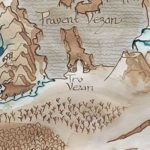
“West. With a man from Svittynis. To Pravent Vezan. They think they have a recipe for stopping the feast. They will not succeed. The Mould is not an ending. It is a new beginning! Exactly like my Elixir. Whoever tries to stop the process will only help it along. To the greater glory of the moulds! Qurand wills it.”
Before Talantius could lapse again into ecstatic praise of the Mould, Klaes asked another question.
“Could you make a weapon from the mould against the New Age?”
“Of course, of course! Many possibilities. Either the New Age takes us, or the Mould takes us and Qurand is saved through rebirth, or we return to Tenatan, where everyone was a slave. Or you free the Eighth Zilath, whom the Seven imprison in the Horologium. He is a rebel. The stars told me he is there.”
“You didn’t actually answer the question,” Taro said sadly.
“What do you want from me?” the wizard muttered, his eyes red and bloodshot. The potion was coursing through his veins, and his body was being tossed between waves of strength and collapse.
“Names!” Fox barked. “What was the name of the man Lyra left with?”
For a moment there was silence.
“Ze… ze… Zenir!” Talantius remembered at last.
“My father,” Taro whispered.
“He spoke of Svittynis, of some catastrophe. But what is catastrophe from the perspective of eternity? Beneficent transformation! Like nature itself, we must pass through winter so that we may be strengthened and life may be refreshed.”
The old man’s head suddenly sagged as though with exhaustion. When he raised it again, his face was weary and tormented. He sat surrounded by his killers, drenched in water and oil, scorched, bound, while his body struggled against the potion that forced it to live and breathe.
“What were they trying to do?” Taro asked.
“Stop the mould, what else?” He shrugged. “I wish them well. I even gave them some advice. Young people should be encouraged.” He winked at Taro with a kindly smile. “They would need to anchor their effort in at least two elements representing Order. More would be better, of course. And since neither of them is a Maghavan, they need real power, a reservoir the size of a mountain lake. Otherwise nothing will happen; the force of the incoming moulds is too great. I told them to use ignotium. There is power enough in that. Apparently this Zenir had some idea, or perhaps instructions, for a flying machine. He wanted to search for the elements in the Sea of Mist. Supposedly there is also a great deposit of ignotium there. But really! You should stop worrying about such foolishness and go dance with the flowering stalks downstairs.”
Talantius tried to stand. His trembling, wrinkled hand closed around the back of the throne, and he struggled to pull himself upright.
Klaes hesitated, then rose. In Yller, respect for elders, and especially for scholars, was a deep virtue. Almost without thinking, he reached out and helped Talantius sit upon the edge of the throne.
“And you—do you control the elements?” Taro asked. She had decided to extract as much knowledge from him as she could. “Could you tell us how, purely in theory, we might close the gate? I know we have no chance. Purely theoretically.”
“Of course!” the old wizard laughed, and the laughter dissolved into another fit of coughing. Then he gave Taro a knowing look, his voice dripping with exhausted irony. “I shall gladly tell you. Theoretically. I understand perfectly well that you have no intention whatsoever of trying it. That it is merely a theoretical curiosity. And I, for my part, am very curious to see what still more interesting method the Mould will find to outwit you. But the procedure itself is simple. You need ignotium, a mage, and a magical circle. You need sources of Order—the old Order, naturally, since in the end you will be doing the Alliance’s work. Runes, elemental magic, the Xalgonian Traits, Siranian crystals—anything that keeps life under control.”
The explanation seemed to exhaust him. He suddenly sank back into the throne and leaned heavily against its half-shattered back.
Klaes bent toward him and asked in a soothing voice, “Did you discover why the breach opened in your tower?”
“Yes, boy. Up there in the heights, while I flew, my tower was struck by a projectile from the South. We were kissed by the Mould. It made contact with us. Here in the North everyone is occupied with defending themselves against the New Age. The Alliance is weakened. The moulds are waking. And I merely bring their prophecy. Stop resisting the inevitable. Qurand itself wants this. It dreams of it. Wild colourless green dreams.”
“You won’t persuade us,” Klaes said.
With the words, he felt resistance rising inside him once again, though it was almost as if he knew himself to be lying. Everything Talantius had said did, in the end, make perfect sense. Klaes simply could not accept that the answer was dissolution into mould.
What is this? he asked himself, and heard his own voice echoing through an inner cavern crowded with unknown shapes: slugs, rodents, sea urchins, stingrays, blastulas, three-headed partridges.
His head spun. He reached quickly for the wine and emptied an entire beaker.
“Youth,” Talantius sighed. “Drink.”
“You said yourself that everything is written in destiny,” Taro said. “What if our destiny is to close the gate?”
“I had hoped that in the end you might join the ranks of my followers,” Talantius replied with a sigh. “It really is preferable to rushing off somewhere else and trying to stop the tide with a sieve. Besides, I don’t know whether you realise this, but mould is a magnificent collective intelligence. Everything is connected. Everything feels. Everything grows together. It is a mysterious and beautiful other form of life. I think you would be happier.”
“Do not begin again with your diseased sermons,” Loverd said sharply, picking up his dagger. “Close the gate and prove that you still belong among human beings, not among creatures possessed by mould.”
“I will not. I will not obstruct a process whose truth I believe in,” the wizard said with a shrug. “If you wish to test your luck, I shall not stop you, because the result may be extremely amusing.”
“Then test that truth by trying to close it,” Vedrax suggested.
Talantius shook his head firmly. “I have already tasted the Mould, and it tastes sweet. The Mould speaks to me.”
“More likely it speaks through him now,” Fox said. “That isn’t Talantius anymore. His brain has gone completely mouldy. Shame.”
Talantius looked steadily at her. “And what will you do now? Murder me in cold blood? That would be something new.”
“That really is the question—what do we do with him?” Taro said. “We can’t simply let him wander the world spreading this infection. Talantius, why don’t you go into that breach of yours?”
“Oh, I have already been there. It is paradise. Unity, wholeness, connection, wisdom. Paradise. If you go, you will see what I saw. Then you will be on my side. No more conflict and wandering.”
“Conflict and wandering sound like life,” Loverd said. “Mould is death. Mould consumes the dead.”
“Then why not go through the gate into your paradise and close it behind you?” Vedrax suggested. “Everyone would be satisfied.”
The wizard shook his head. “No one would be satisfied. The North has outlived itself. Every solution is temporary. The Network, the New Age, the Horologium, the Zurvans—they are all futile attempts. Transformation is inevitable, and I shall not resist it. On the contrary, I long to be a bubble upon the crest of the first wave!”
“Then our destiny is to resist the inevitable,” Vedrax said. “To stand against dark fate and die proudly in the attempt to stop your tide. A true Xalgonian knight could scarcely ask for a better end.”
“Then we stand opposed, boy,” Talantius replied. “May you fight with honour.”
“It will be my pleasure,” Vedrax said calmly. “And I shall do my best.”
“Well, Talantius, I’m sorry,” Klaes said, having at last managed to quiet the clamour of voices in his inner cavern. The rodent had prevailed. “I had imagined that when we met again, we might have the opportunity for a scientific discussion—about ignotium, perhaps. A difference of worldview ought not to prevent that. Tell me something about ignotium. I am eager for knowledge.”
“At first I had no idea how mysterious and double-edged a thing it was,” Talantius said, sinking into thought. He closed his eyes and smiled dreamily.
“You wanted to warn Xalgon. Your messenger brought word that the Elixir thins the Wall…” Klaes prompted.
“I was ignorant then.”
“You had not yet accepted your new god—the Mould?”
“No. It is not a god. It is an experience. A being of transformation. But I bear no resentment toward those who have not yet experienced it. In the end, all of you will be saved.”
“And become those eyeless singers?” Klaes blurted out.
“Yes. Yes. I know you already suspect that everything is otherwise than it seems. They see—deeper, farther, more. The fabric of reality is transparent to them as clear water. They see the starry sky in every direction. They see flowering braids of force, they see the gods themselves and the Unborn weaving with their power the thing we call reality. All this and more may be yours, if you choose to sacrifice your crude human sight.” Talantius smiled at him. “Come, my dear boy. Come downstairs with me and join their graceful dance at my side.”
“You’ll join them yourself. Soon!”
Loverd moved without warning. He sprang toward the old man and drove his dagger, glowing with the rune of fire, straight into his heart.
Talantius died instantly.
For the second time.
“What are you doing?” Klaes shouted, throwing up his hands helplessly.
“I will not allow the prophet of mould to live. He has babbled enough,” Loverd said in a tone that admitted no argument.
Klaes’s shoulders sagged. Talantius was truly dead now. This time there would be no return.
His head spun unpleasantly. He was drunk, yet the voices inside him were screaming louder and louder. It was becoming unbearable. Something had to happen soon. He wanted to scream into the emptiness.
Somehow he restrained himself. The last drops of sanity still burned in the lamp of his consciousness.
Then he noticed Loverd repeating the mantra of his fire rune. The dagger in his hand shone more brightly with every word. In the other hand he held another bottle of oil.
He was preparing to burn Talantius again.
“Stop, Loverd. You can’t simply feed this place to the flames. We need to search the laboratory. The ingredients he mentioned may be here,” Klaes said with slow, emphatic diction, as though speaking to a small child.
“Then I’ll carry him outside,” Loverd said with a shrug.
“What if we throw him into the breach?” Vedrax suggested. “Give him to the Mould, since he desired it so much.”
Vedrax honoured the piety of death and sacrifice.
“We are not doing that. I wouldn’t be surprised if he came back alive and without eyes!” Loverd cried. “Only the embrace of holy flame guarantees that his bones will be purified and that there will be no return.”
For a while they stood over the dead wizard, the man who had once sent three messengers from Maghon to carry the Elixir to Xalgon or Sairis and had, in doing so, fatally entwined their paths.
This was the end.
Loverd purified his dagger in flame and sang hymns to fire.
No one noticed that Lucius, the boy who had led them there and had sat terrified by the door throughout, fled after witnessing the old man’s second murder.

They searched the laboratory. Taro packed several interesting-looking notebooks into her bag and slipped four tourmalines, garnets, and a piece of hematite into her pockets. Klaes found a demijohn full of ignotium and ten ampoules of the Elixir. Loverd carried Talantius’s body out of the tower and prepared a cremation. Before doing so, he searched him, but found nothing of importance.
“Smell him,” he told Fox, who was watching with interest.
Fox did as he said. The moment she drew in the air around Talantius’s corpse, an image flashed before her eyes: wild, exponential growth.
“Ugh! Nothing but spores. It’s already feeding on itself. Burn him!” she barked, recoiling from the corpse.
Loverd lit the funeral pyre and sang prayers to Suvarn, asking him to guide the wizard’s soul toward the Eternal Fire.
“We must close this suppurating wound before its growth brings the sterilizers from the south. They would destroy everything, Svittynis included,” Loverd said. “But we have something Talantius knew nothing about. Vedrax—your blood. We must also find Lyra and Taro’s father.”
“It appears that the Mould threatens Xalgon as well. But I do not know whether fate has assigned me a different role. My father spoke of a place that was still far away,” Vedrax replied.
“Vedrax, whatever spoke to you was only a vision, an apparition. Perhaps it wanted to mislead you. Like this whole place. But some things are real. Your blood affected the gate much as Loverd’s fire did,” Klaes said. The rodent in his head replied: Pah. Futile calling.
Vedrax shook his head. “I am not certain that this is where my life’s journey ought to end. I have no objection to a heroic death, but it should come at destiny’s command, not as the failed experiment of people groping in the dark.”
“Who said anything about bleeding to death?” Fox said. “A few drops of your precious blood would probably be enough.”
“Klaes is talking about sacrifice.” Vedrax pointed at Klaes.
“I am really not talking about all your blood,” Klaes said. “In any case, we have to decide what comes next. Do we look for Lyra? Do we try to close the breach in the tower—and if so, how?”
Vedrax bit his lower lip and said softly to himself, “Though a pointless death does possess a certain charm.”
They returned to the tower and found Lyra’s room. Unlike Talantius’s study, it was orderly and austere. Travel clothes were missing from the wardrobe, though robes and tunics remained. Notes lay on the desk—not a diary or half-written treatise, but a list of tasks.
Close gate: collective ceremonial magic required. Approx. 15 people. Perhaps people can be replaced with runestones. Two or three sources of Order. Preferably three. Ignotium unstable.
Repair Elixir.
What to do with area around tower? Zenir? Disperse or spray.
“Perhaps they were trying to build a flying machine so they could travel west,” Taro said.
“What other sources are there?” Loverd asked, peering over Klaes’s shoulder.
Klaes thought for a moment. “Talantius mentioned the Alliance—Sairis, Xalgon, Gandhara, Ordazin. He spoke about elements, about Aurán, about the Eighth in the Horologium. He said there were many possible paths, though he considered all of them temporary solutions. Does any of that mean something to you, Loverd?”
Loverd nodded.
“I also have Talantius’s notebooks,” Taro said, placing the captured volumes beside Lyra’s notes.
They opened them and stared helplessly at an unreadable thicket of signs.
“Well, we won’t learn much from these,” Klaes said after leafing through several pages. “It looks not only like a private system of symbols, but perhaps a private language as well.”
Fox tried smelling the pages, but discovered nothing.
“Mould,” she muttered. “Nothing but mould.”
They went outside. Thirteen eyeless singers still stood before the gate. Yet they seemed somehow aware of the companions. Their hands were slowly turning into pincers, the movement so gradual as to be almost imperceptible.
Klaes shuddered. “So. Do we try to close the gate? What if Vedrax smears its edges with his blood and Loverd invokes Aurán?” The rodent replied: Vanity of vanities, and greater vanity still.
“I will not allow my blood to be defiled by that fire,” Vedrax said.
“What about mixing ignotium with your blood?” Taro suggested.
“We have to try something,” Klaes said uncertainly. “But first we need to deal with the choir. They worship the Mould. Are they still sentient beings? Will they attack us if we approach the gate?”
“I doubt those poor creatures can still be saved,” Loverd said.
“I’ll see what happens if I go closer,” Klaes said.
He felt strangely drawn toward them. Talantius’s promises echoed in his mind. Perhaps it really was possible to see through reality itself, without spectacles of any kind.
He stepped closer. As soon as he came within three sword-lengths, the singers turned toward him and began clicking their pincers threateningly.
“Careful, Klaes!” Loverd shouted. Klaes looked curiously into the breach.
Taro tasted sweetness upon her tongue. What if I joined the singing? Such beautiful music. The thought flashed through her mind. Sweet. Sweet. Loverd noticed the dreamy look in her eyes and seized her by the shoulders. She suddenly realised that she had stepped into the ring of singers and stumbled backward.
“Wine!” Loverd cried, raising the wineskin. “Let us drink!”
Taro shook her head. “Why struggle? Why not cross the threshold? The eyeless faces are not ugly. They’re beautiful,” she whispered.
“Think of your sister!” Loverd shouted and forced a mouthful of wine into her.
Taro drank. She stood there before the enchanted gate, feeling the power of the magical tourmalines at her belt. Her father had passed through this place. The mad old wizard was responsible for the death of her mother and others she had loved in her little hometown. A bearer of destruction. Or transformation? Could one join the wave? Her head was spinning. She drank deeply.
Vedrax, meanwhile, whose mind was a battleground of fog, wine, and the desire for heroic deeds worthy of a knight, had impaled Talantius’s skull, medallion and all, upon his spear and raised it above the singers. The three nearest twisted their faces into furious snarls. Vedrax hurled the skull among them, but they struck it aside with their pincers. Another singer picked it up and carried it ceremonially into the shining fissure. For an instant they saw a snow-white flash. Vedrax narrowed his eyes and stared, fascinated, into the light. Into the place of transformation.
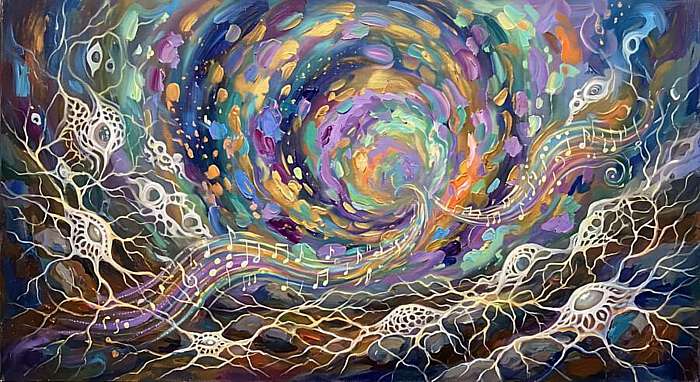
Klaes, meanwhile, felt a vibration of unimaginable pleasure pass through his entire body. He could truly hear distant music. The Slug of Irony shrank down and curled into itself. The Rodent stretched out one paw and reached for an ampoule of Elixir. Why am I doing this? Klaes asked the crowd inside his cavern. To see! To see! You want to behold the truth! The shadows within him sang, while outside the eyeless figures sang with them. As though in a dream, Klaes poured the Elixir onto his fingers and spread a thick layer over his eyes. The voices within and without rose together in a vast crescendo. At last the inner world joined the outer. All voices merged into one final chord.
He looked into the fissure.
Nothing he had ever experienced resembled what came next. He heard colours. Mould became the white of his eyes. He breathed the notes of their song. Smiling, he gazed into the gate and felt the cosmic bliss Talantius had described. The gate opened toward him. He began to sing. At last, connection. All my life I have been alone. Separate. The mycelium is a common nervous system. Whatever happens, everything is all right. Why change anything? What is, is what must be.
Terrible moments moved before his eyes, but now they seemed no more than old dreams: his faceless sister, the dead upon the hill, the despairing destruction of the Arkonians, the degenerate Palladins, the idol built of human bodies, the monstrous murderous train with which his own companions had produced hundreds of corpses. Human sacrifices to a goddess. More. And more. And at last the body of a helpless old man, broken, twice murdered. How much horror has happened to me? And how much horror have I done to others? Is there any reason to remain inside this terrible cycle of torment and killing?
What, after all, had the old Klaes been trying to defend? Nothing but a disconnected and cruel world in which each being stood against every other. A world worn out with age. A blind world that did not know itself. The Mould was kind. Every death was taken in and transformed into new life. Collective life. Somewhere far away, Klaes could feel the remnants of Talantius awakening into a new existence within the Mould.
This is my task now. I have seen the hidden truth. The pain of all those horrors has been washed from me. At last I am sane. Calm.