To understand who the Mantrin Mages were and are, and to grasp the nature of their legendary steel ships, one must first explore the specific Mantrin variety of magic usually called Technomagic, for lack of a better term.
Since time immemorial, the Art (meaning magic) on Qurand has been divided into two great, often contradictory, currents. One path of the Art cultivates human abilities and the power of the mind to divine heights—focusing “inward” and on the “soul”—while the other path cultivates tools and machines, alchemy, and magnetic fluids: the magic contained within matter itself and the possibilities of its arrangement, focusing “outward” and on “instruments.” The wise claim that the ancient True Art, the True Alchemy, integrated both—spiritual development with the development of matter—into a single whole. However, for some reason, a schism occurred, and such is the situation today. Various cultures use different terms for these two paths (sometimes the inner path is simply called magic and the outer technology); here, we shall call the inner path animagic and the outer mechania.
Among traditional masters of magic, particularly the strict maghavans, mechania is viewed as a slippery slope that inevitably leads to darkness. The reason for this stance is that mechania does not cultivate the person or their soul, but only external tools, which can then fall into the hands of practically anyone. According to this view, animagic provides earned power, while mechania provides unearned power. Furthermore, the creations of mechania do not cost a person’s personal energy; they can be built to monstrous proportions and, by their very existence, tempt one toward abuse. An inventor who first explores an aspect of mechania may be a person of great wisdom and good soul for whom the discovery is earned and who understands its risks; however, unwise followers who have not walked the same path can misuse the—now universally available—invention for any purpose.
Animagic can defend itself against this problem to a large extent—every animagician must win every aspect of their power through hard training, and thus they value their power, understand it personally and in detail, and maintain a relationship with it characterized by high enlightenment and responsibility. Of course, all power corrupts, and even among animagicians, one finds those who eventually abuse their personally won and earned magical power or are led to its abuse in good faith by a manipulator. However, its proponents argue that the risk is substantially lower when the path to power requires personal development, rather than when an invention exists in the external world and any politician or power-hungry ruler can seize it for their designs without a second thought.
According to many animagicians, however, mechania leads to darkness not only for this purely practical reason of easy accessibility, but due to its very nature. Instead of focusing inside a human being and possessing an aspect of philosophy and mental discipline, it focuses instrumentally only on the functioning of external things. With this comes an entirely different kind of thinking—thinking that cares for little else besides technical “functioning” as such. As the magician’s attention turns outward toward specific material problems, they begin to perceive the world not as an interconnected, soulful unity of self and environment—against a background of unutterable but feelable mystery—but as a heap of objects that can be skillfully manipulated. They begin to see themselves as just one of these objects. This is the way of the Dividers, who believe that wholes do not truly exist, only parts. And once the world is merely the sum of its parts, it transforms before the magician’s eyes into one great machine. Into the Horologium.
Such is the opinion of animagic traditionalists. But who believes those bearded critics of everything new, right?
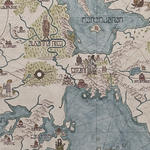
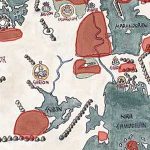
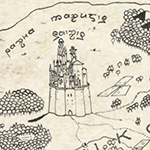
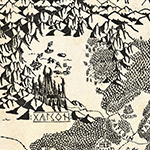
If we look at Qurand, mechania is strictly forbidden in Gandhara, where its practice carries an immediate death penalty. No other country maintains such a harsh stance; nevertheless, in the vast majority of lands, traditionalist animagicians still hold positions of power, attempting to stifle the influence of mechania as much as possible without openly forbidding it—rather, they openly proclaim it to be a monstrosity. There are only two lands where mechania explicitly flourishes: Xalgon and Yller. Both are more or less infamous for either moral decadence, black magic, or a completely destroyed environment, which does not give mechania a good reputation overall.
A completely unique case is Mantrin. The Mantrin Mages originally hail from the Azharian race, the noblest of mortals, and were originally pure animagicians. However, millennia ago, they set out on their specific path, literally gripped by the desire to restore the original unity of the Art and heal the wound that separated animagic and mechania. They saw their goal as noble and good, a potential salvation for Qurand, which—if things were allowed to continue unchanged—risked a terrible war one day between the proponents of animagic and mechania.
Their path consisted of carefully examining the ideas and traditions of both animagic and mechania and cultivating their mutual interconnection. They created machines, but cautiously, ensuring they followed the patterns of nature as closely as possible, and every machine and tool was crafted to obey only one who possessed a corresponding understanding of the animagic art. Their way was gentle toward the environment, demanding in quality, and in many ways even more ascetic than the approach of the animagicians. After centuries of caution, slow progress, and partial success, restlessness began to grow. Generations passed without the fabled Unification of the Art coming into sight. They developed a whole series of beautiful machines that did not look like machines, but rather like crystal fish or giant glass flowers. They discovered many secrets of the human mind and the possibilities of its connection to the world of matter. But it was not enough for them.
And that was when Fillardus the Seer, the youngest of the trio of Scholars, arrived on Mantrin. Seers are mysterious beings of immense power and knowledge, the highest masters in a specific field, and they always come to Qurand in Trios. Fillardus was from the Trio of Seers whose mastery lay in the sciences, and Fillardus was the one focused on technical arts and inventions. The knowledge he brought to Qurand from the mysterious place of his birth far exceeded anything known to anyone thus far. The day Fillardus stepped onto the soil of Mantrin changed the course of the island forever.
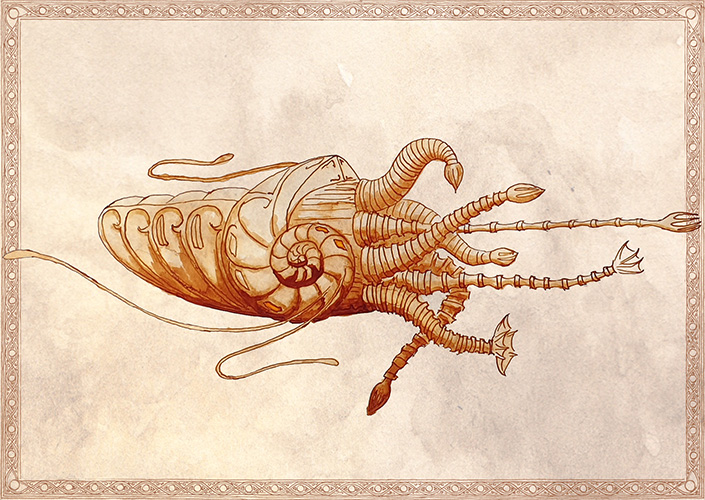
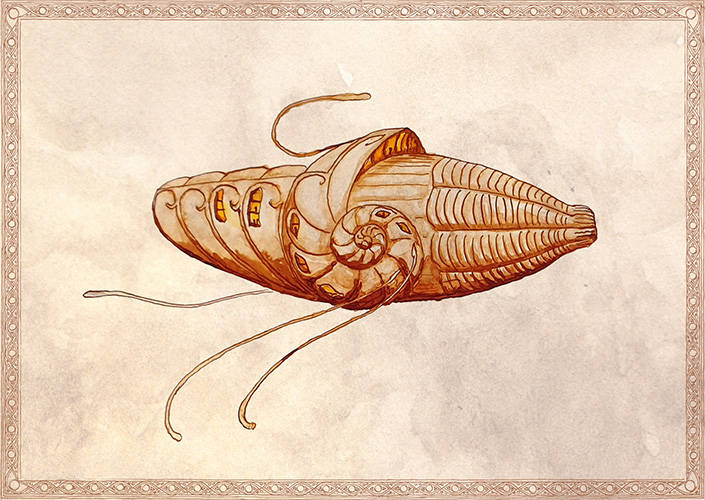
Fillardus taught the Mantrin Mages much, and they eagerly drank from the cup of knowledge, thirsty after centuries of difficult climbing by their own strength. Initially, it seemed that Fillardus’s knowledge was the missing piece of the puzzle and that the path to the Unification of the Art was now short. An explosion of creativity followed: magical and beautiful cities of synthetic opal and shimmering artificial forests arose on Mantrin, providing food for the Mantrins without the need to till fields or kill animals. The Mantrins set out in submarines of transparent metal to explore the undersea world at the base of their islands. And they began to build their legendary ships.
In their creative enthusiasm, however, they began to take pleasure primarily in their increasingly elegant and miraculous creations, and the intent to achieve the Unification of the Art was pushed further and further to the periphery of their attention. Until finally, it was forgotten entirely. And so, Mantrin Technomagic was born. It contains much of both mechania and animagic, perhaps even a hint of that unification, but no more than that. Ultimately, it is not a true unification, but merely a conglomerate. More beautiful and harmonious than mechania, but more mechanical than animagic.