Originally a race of light-beings of immense power, for whom bodies are merely garments to be discarded or created anew at will. A significant weakness of the Azharians is the decline of their power across generations. Only the original Descended maintain their full potency, and their bodies are strangers to change. They undergo a renaming ritual, through which they are symbolically reborn without changing their physical form. Later generations do age and die, yet they carry the majority of their memories across reincarnations. It is only the even later generations whose life cycles, bodies, and souls become similar to those of ordinary humans. According to one legend, the Azharians are distant ancestors of the Dryads, though some do not believe this. Given the vast differences between the original Azharians and the nations that later arose from them, nothing concrete can be said about a height or appearance common to all Azharian peoples. However, there is one theme they all share to some degree: the theme of memory and recollection.

Known Nations of the Azharian Race:
– Pre-Azharians: The original Azharians are a divine people. Their bodies are beautiful and noble, difficult to destroy by external force, for their bones are as hard as adamant and their tissues regenerate rapidly. A unique trait of their appearance is that their “Azharian-ness” can be more or less present; thus, their look can shift in an instant from an ordinary human, greyed by the world, into a radiant divine being simply by the stirring of their inner light. They possess a naturally abundant supply of magical energies across the entire spectrum. Their immortal souls can exist in the world even without a body (acting through magic and will) and, with some effort, can materialize a new body.
Later generations of Azharians possess bodies that age and die, and such individuals reincarnate into new bodies within the same nation. Reincarnated souls initially have only very dim memories of their previous life and grow up essentially as normal children. This changes during the Initiation into Adulthood, when the floodgates of their memory are opened, and the initiates suddenly remember their previous incarnations. At this time, they add the specific name of the reincarnated soul to their childhood family name.
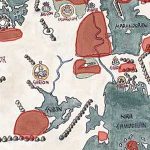
– Archaics: This nation (and culture) is characterized by the rejection of all instrumentality—tools, houses, clothing, books; simply everything others use to make life easier. The Archaics train their bodies, will, and memory—or use magic—for tasks where others rely on tools. In many ways, they strive to do without instruments even where tools would seem to save labor, viewing them as unnecessary distractions. Over ages, they have bred themselves for climate resilience, “elephantine” memory, and a diet based primarily on hunting and gathering. Physically, the Archaics are giants: the average height for women is 210 cm and for men 220 cm. Due to a lifetime spent outdoors in constant motion, their builds are athletic and statuesque, with a healthy proportion of muscle and subcutaneous fat. Their skin is fair with a faint copper tan from the sun; their hair and beards are most often red or dark bronze. Their magical talents lie primarily in Energy Magic (Mana) and Will Magic, especially in collective forms of these powers. They do not care for Elemental Magic, viewing it as insensitive to the balance of nature, and many other forms of magic are inaccessible to them as they require physical aids.
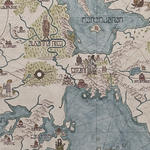
– Mantrins: The population of the two small islands, Vaktar and Mantrin. The Mantrins are similar to the Archaics in appearance and facial features and are also most often red-haired. However, instead of the giant proportions of the Archaics, they reach normal human height, and their bodies are quite ordinarily built, lacking the heroic musculature and statuesque proportions of their naked relatives. Typical attire: a technomagical mask, a magus robe with technomagical elements.
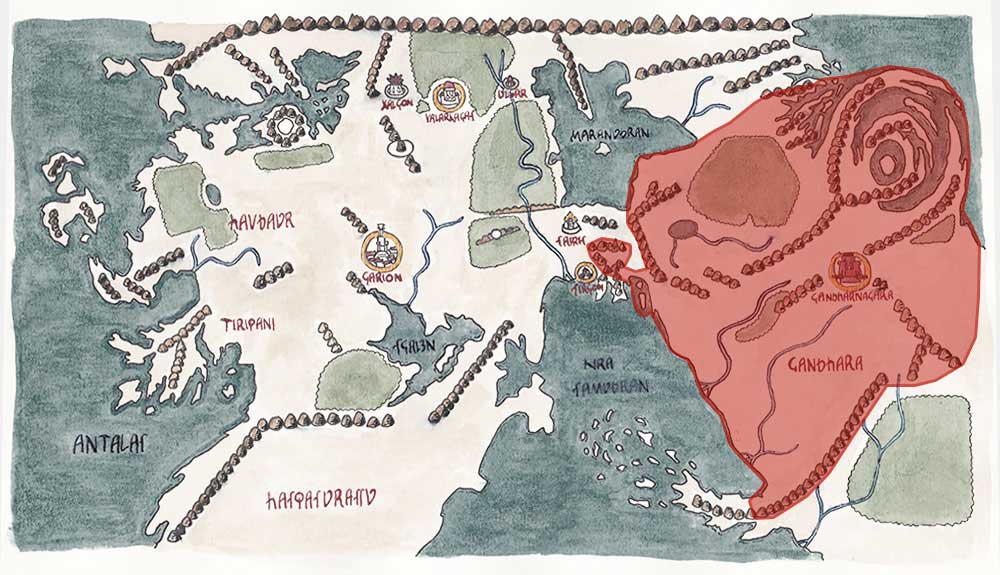
– Gandharans: Inhabitants of the giant empire to the east of Sirania. Gandharans are, on average, half a head shorter than the people of the western lands. They have mahogany skin and sharp, angular features that make their faces resemble a cross between a bird of prey and a woodcarving. they live to an average age higher than most humans, usually 100, rarely more than 120 years. Gandharans are particularly famous for their phenomenal memory. Even without training, they possess excellent visual, episodic, and verbal memory; however, with the help of Gandharan memory techniques, their capacity is multiplied many times over. The Gandharans harbor a distrust of writing and commit everything essential to memory—including all scholarly works, historical records, and manuals of all kinds. In this, they are similar to their distantly related cousins, the Archaics.