[written down by Johana Passerin]
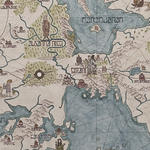
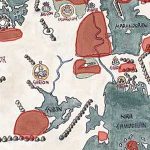
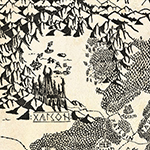
In the previous part of the story, entitled Foxes and Ravens, the heroes arrived at The Inn at the Three Foxes, where they were reunited with The Host. They warned him and, through him, the inhabitants of Iacana of the approaching doom. With The Host’s help, they dispatched a portion of the Elixir of True Sight with messengers through the Alpa Tarnás woods toward Sairis. They themselves decided to head for the northern city of Xalgon. The Host provided them with supplies and gave them a fox as a advisor and guide for the journey. The party set off northwest through dense forests to avoid the dangers of the roads. Beyond the woods, rest perhaps awaits them in Arkon, a settlement of worshippers of the sacred fire. The party leaves Iacana, enters the woods, and finally spends the night at a crossroads of forest paths beneath a sacred tree.

Beneath the spreading branches of the majestic oak stood four travelers, looking for places to rest for the night. They unsaddled their horses and unpacked their blankets. Jarn still couldn’t settle down, fidgeting and constantly looking back toward the direction where he had previously caught sight of lights on the hills.
“Shouldn’t we go up there after all? Perhaps they’re short a dance partner,” he said at last.
“Hush, go to sleep,” Klaes chided him.
So Jarn pulled a strange item out of his pack—an eye mask, silk of course—and lay down to sleep. Hopefully he’ll fall asleep, thought Al-Raqím, who had the first watch. He sat at the foot of the tree and listened to a whisper—perhaps the rustling of leaves, perhaps the distant voices of dancers on the hill.
Jarn woke up. He couldn’t tell how long he had slept or how far the night had advanced. He listened into the darkness. A distant ha-ha-ha-ha reached his ears. Silver moonlight penetrated the dense foliage of the trees.
Beneath the oak in a shadow-filled wood,
Four weary heroes sleep where they stood,
And a fox watches over their peaceful sleep,
While voices drift on the night breeze deep, thought Jarn.
He felt as though he heard the snapping of a twig—now here, now there—and that those voices singing ha-ha-ha sounded closer and closer. He shuddered.
Very slowly he felt for his knitting needle and gripped it tightly. The sounds of the night forest terrified him. He opened his eyes a crack. And then—beside him he saw feet, wrapped in a sort of silk foot-wrap. Although it reminded him of a silkworm cocoon, that did not lessen his fright. He could no longer pretend to lie there sleeping and quickly rolled aside. He drew out his needle and held it out before him.
He saw a figure, entirely wrapped in a whitish cocoon, including hands and face. It crouched and stared at him, or perhaps through him, which unsettled him. It stared at him, calm, quiet, and motionless. Jarn grabbed the figure by the face and tried to push it away, but in vain. He felt that beneath the cocoon the face was merely a bare skull. Calmly and unruffled, it also laid a hand on his face.
A silky touch,
A bony hand,
Instills strange thoughts
At its command.
Jarn felt as though it had merely stroked him. It wasn’t anything terrible, as he had subconsciously expected. Then it let its bony hand drop, and its eye sockets flared with light. The light blinded him.
Then he woke with a start. In the moonlight he saw Al-Raqím sitting under the tree on watch, saw his sleeping companions, and the fox curled into a ball, breathing quietly. It had been a dream!
He stood up and gazed toward the mountain. He listened, but heard no ha-ha-ha, nor did he catch sight of any lights.
“What is it?” Al-Raqím wondered.
“An angel visited my dream, a sight most deep; I hope I do not perish in my sleep!” Jarn replied.
“Really? And did it say anything to you?”
“A wordless message came to me, I know not what—I’d ask the owls to see.”
“There are no owls here. Tell me, was it a friend or foe, that angel of yours?”
“I have no clue, nor do I know where he flew,” Jarn said dejectedly.
“Well then, go back to sleep,” Al-Raqím admonished him. “Perhaps your dream will have a continuation.”
Jarn nodded and shuffled over to his pile of blankets. He burrowed into them and either pretended to sleep or actually fell asleep.
Meanwhile, Klaes was dreaming a different dream: he stood over the coffin of his teacher Zeilet. Zeilet was his role model; he held her in high regard and eagerly learned from her. Yllerians do not live in families and clans, but in laboratories usually led by a patriarch. In the case of Klaes’s laboratory, the head of the community was a matriarch, the wise old Zeilet. The Professor. Besides that, there was another peculiarity: while Yller’s widely accepted doctrine viewed the world as the sum of knowable facts—and Yllerian scholars basically ignored the unknowable—Zeilet was interested in Ignotium. Naturally, she researched the unexplored element only in her spare time.
She considered onda`at, as she called this unknowable element, worthy of interest, something that had to be reckoned with. She held that onda`at violated the common property of knowability shared by all other elements. How to know the unknowable? Zeilet believed it was possible to examine the interface, the interaction of Ignotium with the knowable world. That was what she researched, and Klaes eagerly followed her work. But then she died unexpectedly of a mysterious poisoning. Klaes’s departure into the world was essentially an attempt to come to terms with her death, an act of mourning. As he then trudged through the northern kingdoms, he often dreamed of his teacher, like this dream:
He stood beneath a tree over her coffin just before the cremation was to be performed. Zeilet suddenly opened her eyes and laid a hand on his face. Klaes was startled, but on the other hand he was glad to see his professor alive. She smiled and pronounced: “A dangerous path lies ahead of you. There is much I haven’t told you about Ignotium. It is like water, like the murmur of water. Follow the song of water.”
“Water?” Klaes exclaimed in bewilderment, and with that he woke up. He felt sorrow. He would have liked the dream to continue, to learn more. Al-Raqím, who was on watch, noticed him and spoke to him, and the dream vanished.
“Did you see an angel too?”
“No. I saw my professor,” Klaes answered, confused.
The conversation woke the Huntress too. The fox is a nocturnal creature, so she slept only lightly. Now she was awake as well. And then they noticed Jarn climbing into the tree crown, looking around.
“No fires do I see. I listen down the way: They’ve set out coming down to us without delay!”
“Who?”
“Those dancers from the mountain. They’ve come to take us into the circle. Can we go up there? Should I call out to them?”
“Above all, we ought to sleep! You’re raving again, Jarn, climb down!” Klaes ordered him. Jarn reluctantly climbed down from the tree, and no sooner was he on the ground than he began practicing dance steps.
“La–la–la. I’ll warm up in the meantime before they arrive.”
Klaes grabbed him: “Go lay down!”
Jarn tried to pull away and whined: “They’ll be here in a moment; we’ll dance to the music.”
Sunva, annoyed, disentangled herself from her blankets and gripped Jarn firmly with both hands. “Enough, you fool. Nobody is here and we’re not going anywhere. We must rest.”
Jarn turned to the fox: “Fox, surely you smell them!”
The fox drew in the air and softly replied: “I smell scents of water.”
“Like a swamp? Fish?” Al-Raqím chimed in.
“Deep waters?” Jarn asked.
“It is an ancient watery scent. From deep forest pools it was sent. And it walks among us here, inspiring dreams and clouding fear,” the Fox answered, winking at Jarn. “Perhaps you’ll understand it better this way, Jarn. Humans are not nocturnal creatures, so go back to sleep.” Jarn fell silent for a moment.
“Do you think some water creature is walking among us here?” Al-Raqím asked.
“Hm.”
“And is it, Fox, a good or a bad creature?”
“I don’t know. Is a river good or bad?”
“Oh dear. Couldn’t we get a normal fox that smells stink and runs away?!” Al-Raqím grumbled in disappointment.
The Huntress laughed: “A river? Actually, I dreamed about water too. I was bathing. Well, first I was chasing a doe, but then I stopped pursuing her and bathed in a stream. But—if any of us hasn’t had peaceful sleep in this place, let’s lay down a bit farther away. I was taught not to sleep over at sacrificial grounds and graveyards.”
So they moved their camp twenty swords away from the tree. Klaes put on his spectacles and looked around for a moment, but noticed nothing unusual. He had the next watch anyway, so he wanted to check everything thoroughly. He heard Jarn and Al-Raqím whispering:
“The night breeze stroked my face. No thought of sleep in this place—it’s over there! I ought to dance!”
“If you want to dance, you need strength. If Klaes sees them coming, he’ll definitely wake us. Sleep!”
“I cannot sleep, no slumber draws near. They’re close in the thicket, I fear.”
“They’re not. Count mulberries.”
Jarn tried to be quiet, but his longing and sorrow overwhelmed him. So he pulled out one of his silk handkerchiefs and embroidered by starlight. He embroidered a nightmare with antennae, and that calmed him. Only then did he fall asleep.
Klaes passed the watch to the Huntress. Before that, they agreed to let Jarn rest. Toward morning Al-Raqím had one more dream: He saw a great altar hovering amidst mists. A gold ring glittered upon the altar, and above it a raven and a falcon writhed in a life-or-death struggle. In the end, the Raven dealt the falcon a mortal blow, and it plunged into the mist. The Raven seized the ring and flew away.
In the morning, bright sunbeams that penetrated the dense foliage of the old oak woke them. Autumn was beginning, and the light was sweet and gentle. The shadows and dreams of the night seemed forgotten. But then Al-Raqím remembered his dream about the clash between the raven and the falcon. Over breakfast, he told it to the others.
“I have a bad feeling about it,” he said at last.
“I have a good feeling about it,” Jarn countered. The two measured each other with a look, but preferred not to enter into a debate. Jarn stood up, took the handkerchief he had embroidered during the night, and laid it at the roots of the sacrificial tree. Near it he felt excited interest and something akin to enthusiasm. Klaes too recalled his dream once more. Was that dream genuine, or was it a delusion? He touched the tree, laying a hand on its bark. His skeptical soul experienced confusion. Wasn’t it a strange coincidence that everyone had dreamed of water in one way or another? Even the fox had spoken of smelling a watery scent. What did it mean? And could it be known, or not? Yllerians were not accustomed to questioning the meaning of dreams. It was said—what cannot be known is not worth investigating. Yet at the same time, his bittersweet dream reminded him of his beloved Zeilet, who had zealously researched Ignotium, to which dreams also belonged. He let his hand slide from the trunk of the tree. Perhaps the tree is watching us too and it was the very thing that caused us to dream those strange things, he thought, and then quickly set off after his friends, who were already a good distance ahead on the trail.
After three hours of climbing uphill, the trees began to thin out. They entered a belt of scree slopes overgrown only with hardy dwarf pine bushes. Jarn practically ran uphill, as if he couldn’t wait to finally meet the dancers.
“Did you see any tracks? Are we going the right way?” Jarn asked the Huntress.
The Huntress pondered: “Actually, there are far too many tracks here. Confusion.”
“And you, Fox? Where are my dancers in the night? What can you tell me of this sight?”
“I smell many tracks of the forest folk. Animal and elven tracks emerge from the thickets and the woods. The Huntress is right. A lot of tracks. Some fresh and others older.”
“Oh dear. We must have missed their trace. Did they go through some other mountain place?”
The Huntress shrugged and kept looking at the ground.
“Don’t worry about it,” Al-Raqím comforted him, inwardly relieved that a meeting with the dancers had not occurred.
Before long, they reached the crest of the hill. Looking back, they saw a wall of black clouds on the southeastern horizon. A column of thick smoke rose from Iacana. Everyone knew what that meant. The enemy had seized the picturesque town. They quickened their pace. Then they saw something before them that at first looked like tall people standing motionless, but as they drew closer, they saw that they were stones standing in a circle. Their statue-like quality was not the result of human stonework, but merely the selection of the right stones. Who knows from what distances they had been brought here.
Al-Raqím nudged Jarn: “Aren’t those your dancers?”
Jarn stared at the statues: “Ah—they dance to the rhythm of the ages.”
In the middle of the circle of dancers stood a stone altar. Al-Raqím exclaimed in wonder: “I saw this in my dream. The falcon fought the raven there and lost. And here—look!”
A raven feather lay on the altar, and on the grass lay a torn wreath woven of mountain flowers. The altar stone was splashed with recently dried blood.
Jarn sighed: “We should have come here in the night. We would have aided in the fight.”
Al-Raqím shook his head: “Sure, and right now we’d be standing here like those stones.”
Meanwhile Klaes was already examining the altar. It had a square base, but its shape gradually transformed; the top slab was circular. In the middle was a hollow containing the raven feather. Klaes picked it up with tweezers and inspected it. It was large, larger than the feather of ordinary ravens, and its blackness gleamed and shimmered in all colors of the rainbow. Jarn picked up the wreath from the ground. It was woven mainly of local flowers, though it also contained spring and meadow flowers. He tried to repair it.
“How does this look to you?” Al-Raqím asked the Huntress. They remained standing outside, holding the horses.
“I have an ill feeling about this,” Sunva answered. “I’ve seen such altars in the woods. The wreath belongs to it, but that doesn’t.” She pointed a finger at the raven feather. Klaes was just pulling something out of his pocket, and before they could say anything, he struck a lighter and set the feather on fire.
“By all the gods,” the Huntress cursed. But by then the feather was burning, and black smoke began crawling along the ground and wrapping around the stones. Simultaneously, a bird’s screech echoed from the sky. They looked up and spotted three small dots high above. Then the dots began growing larger as they plummeted downward in a dive.
“What on earth is that?!” Al-Raqím shouted, shading his eyes.
Whatever landed on the trail about two hundred swords away from them with a thud stood up and set off in their direction. Three tall black figures, as if draped in cloaks. They were enveloped by the same smoke given off by the black feather that Klaes was still holding in his hand.
“Away from here! Run!” the Huntress cried in horror. Klaes threw away the feather. They ran to the horses. Hastily mounting, they rode swiftly away along the stony trail. The hilltop now separated them from the figures. They preferred not to look back and urged their horses to a gallop. But the mountain trail wasn’t well suited for riding, and the horses could not be forced to go faster. Only after a moment could they pick up speed, and by then they saw the figures not far behind them again.
It seemed to them they had been riding for some time and the black figures were disappearing from their sight, when suddenly they had to slow down because mist filling the valley on the other side of the altar mountain began surrounding them. Ultimately, the terrain forced them to dismount. They slowly descended along the path until a crossroads appeared before them. Which way next? They consulted among themselves.
Klaes looked at the map. Although these paths weren’t marked on it, he knew approximately where they were. “I certainly wouldn’t take the path on the left; those are easy routes for the New Age.” The others raised no objections, so they took the path on the right, lower and lower. The mist began to thicken and solidify. Even the Huntress hesitated at times which way to go.
“Perhaps we ought to light a torch,” Klaes said.
“But then those behind us will see us with ease; without fire, isn’t hope greater under the trees?” Jarn objected. Then they noticed he was wearing the wreath he had picked up on the mountain by the altar on his head.
“I get the feeling those behind us don’t much like fire,” Klaes said, though it didn’t sound very convincing. The Fox nudged Sunva with her snout and gave her a meaningful look.
“Perhaps you won’t need fire,” Sunva said.
“That’s true; we have the fox, after all.”
So they set off behind the fox.
The Fox sniffed the scents of the forest. Sticking to the path was not in the least bit difficult for her, but as she sniffed the mist, strange things began racing through her head. It was similar to that time she ate a lot of magic mushrooms. The mist was thicker near the ground and instilled in her the feeling that the path was the only wrong turn.
Humans keep treading these paths, she thought. With their feet they smooth the roots of trees, displace pebbles, trample beetles, and wear away moss. She tried to shake it off, but something whispered to her that losing the path would mean finding the path. Perhaps it could confuse those figures pursuing us.
She clenched her teeth and gathered all her determination. She recalled her promise to The Master to watch over these humans. And resolutely she trotted on along what she considered the path, even though doubts constantly plagued her: what if your urge is right, but your stubbornness is leading you to ruin?
And—what is a path, actually? the philosophizing fox asked herself. Then she understood that the source of those strange ideas and intrusive thoughts was not in her mind, but in the mist. In reality (though the fox had no idea of this), the source of those ideas was whoever had brewed the mist.
Even the humans walking single file behind the fox began having strange thoughts—for instance, that someone was watching them from behind the trees.
“Let’s move faster,” Al-Raqím muttered, “there are faces behind the trees there.”
“Alright, alright, let’s pick up the pace,” Klaes agreed.
For some time, only the thudding of their feet on moss and stones, the snorting of horses, and quickened breathing could be heard. Then suddenly the forest parted, and from the mist emerged the arch of a low stone bridge. They heard the rustling murmur of waters, but above all, the screech they had heard earlier resounded again. Now, however, they could not see the sky, and behind them into the mist they could barely see ten swords. They ran toward the bridge over the foaming stream. But on the other side of the bridge, a shadowy figure rose up. Behind them, they already heard thudding footsteps.
“Into the water! Run into the water!” Jarn shouted, and together with his horse he ran into the rapids. The water instantly embraced him and carried him. He realized that the waves had hands and were carrying him. The water was not as icy as he had expected. Then he saw that what was holding him was a naiad. She had a cold embrace, lustful eyes, and a sweet smile with many small, sharp teeth.
“Follow me!” he called, watching the bridge rapidly recede.
Klaes ran along the bank. “We must fish him out!” he shouted, preparing a rope. He tied one end around his waist, while Al-Raqím grabbed the other. Before jumping into the water, he saw that in the river a multitude of eager hands reached up toward him, a multitude of naiad bodies rippling there. As soon as he was in the water, two grabbed him at once and pressed against him with perverse eagerness. The Huntress fired several confused arrows at the figures emerging from the mist behind them. Then she too threw herself into the waves. Klaes felt the naiads pulling him into the water, but he didn’t want to go in there in the slightest. He stumbled along the bank, bruising himself against stones and fallen trees. One naiad caught him by the leg, but he broke free. Finally, the rope slipped from his hand. He saw his friends swaying away on the waves. Klaes was reluctant to follow them, however. And so he pushed further through the thickets, and the fox ran with him along the bank of the treacherous torrent. It was not hard for her to leap over obstacles and push through the brush.
He heard the neighing of horses and receding thudding. No sooner had their horses sensed the black figures behind them than they broke free and scattered. Only Jarn held onto his.

Al-Raqím, Sunva, and Jarn were carried along by the current and the naiads. They more or less enjoyed the embrace of their cold arms for the time being. As long as they didn’t try to resist, the journey in the embrace of the waves was quite pleasant. Only when they looked into the naiads’ faces were they frightened: for the naiads had black eyes, pale faces, and sharp pike teeth. Their touches were more than intimate. It was something between an erotic dream and a nightmare. After some time, over the murmur and rustle of waves, they heard a louder roaring. A waterfall! The waters of the stream fell from a height of seven swords into a calm, green mountain pond. The naiads ensured that no harm came to the humans as they fell into the water. When they swam to the surface, they beheld a mysterious place: on the green mossy bank stood a menhir decorated with lines and runes. On the grass beside it sat a female figure. In some ways she resembled the naiads. She had olive, almost greenish skin, long limbs, but her face was shrouded by pitch-black hair. Her robe was dark black as well.
Jarn emerged from the water. He wanted to place the wreath on the figure’s head. As long as he watched her from the pond, he felt wonder. But in her close presence, pure terror seized him. He bent down and laid it at her feet. She, as if understanding his intention, bent down and put it on her head. She bound her pitch-black hair with it and then spoke in a deep, non-human voice: “We are two who rule these woods. I—the one without a face, and my sister, the one with a face.”
Jarn could not manage a word, so he merely bowed solemnly.
“I summoned you to me, even though by doing so I stake your lives. For my sister is not like me. We searched, we fumbled into new things, and we were wounded. A new age is coming, but you know that, for you are its heralds. This world has experienced many new ages. But this one comes through a rift between worlds, and in its wake come other forces still. Hidden cargo. Unannounced guests. We are older than the human settlements you are trying to save. Us, the older pieces of the world, the new age will not threaten, but the forces that come behind it—beings of the interworld that have no name in our world—they can uproot even the oldest roots. Break the spines of ancient harmonies. We clashed with the raven; he is the face of one of these forces. He brings endless hunger and a cursed song. He will drink dry the springs, leave places of consecration to perish. The Sister Without a Face communicates this through you to the world outside. Ancient covenants will fall. The order of forest, meadow, and city will collapse. Warn the meadows and cities, for the forests already know of the threat.”
Jarn bowed again. “Yes, we will tell them,” gasped Al-Raqím, who listened to the conversation lying half in the water, in the embrace of naiads, with the upper half of his body on the bank.
“Do not bow so much,” the faceless one said chillingly. “As I said, my sister is hungry. Her herds relish human flesh. I hold her in her place, but for how long? Do not linger in this forest!”
“Can you reveal to us which way we should proceed?” Al-Raqím called from the pool.
“Downstream,” the Faceless One gestured with a thin hand toward the place where the stream flowed out of the pond between two stones and rolled onward along a stony bed.
Sunva, hearing this, groaned: “I can’t take staying in the water much longer. I’m terribly cold. I need to get onto the bank at least for a moment.”
But the naiads, as if understanding what the faceless lady had said, were already sweeping them along. Behind them, a guttural growl sounded. Al-Raqím looked back and only out of the corner of his eye caught sight of the creature flinging her hair back with a jerk of her head.
Not long after the trio of friends continued their journey along the water path, Klaes and the fox arrived at the waterfall. The Yllerian wanted to peer over the edge of the rock, but the fox nipped at his trouser leg and held him back.
“I smell danger,” she muttered. The naiads in the torrent, who had been watching them all along, also shook their heads and pointed past the edge of the waterfall.
“What danger? Where is it?”
The fox sniffed the air and then pointed left with her snout. “There on the bank.”
Klaes looked around cautiously, but saw nothing. The naiads gestured excited at him, and some reached their hands out of the water, groping at his legs. He noticed they had thin swimming webs between their fingers. Their fingernails resembled carp scales. He shuddered in disgust.
“This is precisely what I didn’t want, but in the end we must go into the water after all,” he whispered. The fox made a disgusted face and backed away. Klaes, however, firmly grabbed her and held her in his arms. Scarcely had he taken his first step into the water when his feet slipped out from under him, but instead of a fall and a splash following, dozens of slimy hands and feet gently supported and embraced him. Softly and smoothly they carried him through the waterfall. He even felt as though finned hands held his nose and ears closed, and a sort of catfish mouth kissed him beneath the surface. Then he emerged, still holding the fox in his arms, and looked around cautiously. The waterfall rushed and roared. On the right side he saw a stone decorated with lines, runes, and certain red symbols. Klaes noted movement on the slope above the menhir. Something was running down toward the pond—lurching movements suggesting it was neither human nor beast, but rather something out of an evil dream. He felt danger, but searched with his eyes for his friends, or at least some trace or sign. He leaped onto the bank, but that something—at which he did not dare look—was rapidly approaching.
He leaped into the pond and swam with the fox to the opposite bank; a swift, rushing current flowing out of the pond now separated him from that Something. The creature stopped on the opposite bank and walked back and forth with a lurch for a moment. Klaes could not look directly at it; he only ever looked out of the corner of his eye. Something told him that looking directly into its face would mean his death.
Suddenly the creature leaped, rose into the air, and landed on Klaes’s side. Klaes’s heart was in his throat. Without thinking, he threw himself back into the pond and swam away from the bank.
The fox in his arms sputtered and sneezed. He trod water, even though he didn’t have to. “Eeeeh,” he managed at first, only an inarticulate sound. Finally catching his breath: “What am I to do!”
The fox spat out water and barked. “The naiads.”
Klaes turned to the water creatures surrounding them. Will you help us?
One of them gestured: we will submerge beneath the water. Take a breath. Klaes and the fox took as deep a breath as they could. Then they were grabbed and pushed beneath the surface. The journey under water—and perhaps beneath the bank—lasted an eternity. Klaes felt as if his lungs would explode. This is the end, he thought. In the end, however, he felt that they had left the pond and were being swept along by the swift current of the stream. Finally they surfaced. Klaes gasped for air. He opened his eyes. And at that moment, his gaze brushed against the face of the creature standing on the bank, extending its limbs toward him in one last menacing gesture. That face was not of this world; in truth it wasn’t even a face, but an ever-shifting scene presenting to the viewer scenes from nightmares. It was an everlasting moment of first terror in which the heart stops, yet it did not relent. He passed out. The fox felt his arms suddenly release her, his head sinking into the waves. She didn’t understand what had happened, but supported him with her snout and let herself be carried along by the naiads together with him.
Sunva, Al-Raqím, and Jarn, still dragging behind them one of the horses—badly battered and terrified—swam on with the current. They were unbearably cold by now, so they looked for a spot where they could get onto the bank. In one bend of the stream, they managed to catch hold of roots. The naiads released them from their grip only reluctantly. Once on the bank, they just lay there for a moment, shivering with cold. At first, Sunva could hardly move or speak; her lips were bluish and her hands and feet helplessly stiffened by the cold. Then they crawled a little farther from the bank, removed the saddle from the poor horse, and looked around.
“We must warm up and dry off; let’s build a fire,” Sunva said, and with trembling hands began gathering kindling, twigs, dry grass, and moss. She searched her pockets for a flint and steel, and when she found them, painstakingly dried them using moss. Fortunately, she was lucky enough to find tinder fungus, and with its help she kindled a fire. They took off their wet clothes and hung them around the fire. They huddled close to each other and to the fire, nearly naked. Sunva glanced curiously at what a Lorinian looked like without a corset and suspenders. Then she saw more than was modest and blushed a little. Thus the first warming took place on Sunva’s cheek.
“I called to you into the stream to leap, But fear of accident you chose to keep. Now Klaes and Fox are nowhere to be seen! Who knows what trouble lies in between?” versified Jarn, rubbing the Huntress’s back as he spoke. Al-Raqím pushed him aside: “Move over, that’s a job for a man.”
Jarn stood angrily above them, putting his hands on his hips.
“Do you hear what I say? Have you water in your ear? Where Klaes is now, does anyone hear?! What shall we do? Shall we go search the wood through?”
Sunva looked up (and immediately averted her eyes again): “Of course, as soon as we pull ourselves together a bit, we’ll go look for them. We barely escaped with our lives.”
“And maybe the fox will smell our fire and find us herself,” Al-Raqím said.
“Maybe not only the fox. Remember what the Faceless One said—that she has a sister and she eats human flesh. And her herds…” Jarn said. At the mere memory of the Faceless One, he trembled.
“Hm. But without fire we’ll die of cold,” Sunva countered. “We need it at least for a little while.”
“Perhaps—you could ask those water creatures to help us look for them,” Al-Raqím suggested. Jarn looked back. The naiads. The experience with them had been exceedingly pleasant, yet their touches sucked the human warmth from the body. He walked down to the bank a little, and his gaze met their black eyes. They didn’t look particularly friendly. He returned to his friends.
“The naiads frown on the fire. We should put it out,” he announced to his companions upon returning from the stream.
“Are you crazy? We haven’t even warmed up yet.”
“If we put it not out, no help will they send, And we wouldn’t want to abandon our friend! And we might draw the dark-haired lady’s sister near— I don’t know about you, but I’ve no wish to see her here!” Jarn said decisively, already carrying water in his hat and preparing to douse the fire. Al-Raqím lunged at him and spilled his water.
“You’ve got it completely mixed up. So go talk to them, ask them to help us, but leave us in peace. Look, Sunva is still all blue with cold!”
Jarn shoved Al-Raqím.
“What are you doing?!”
“You’ve lost your mind again!”
“The naiads will lend a hand When water douses the burning brand!”
“You’ve just gotten that into your head—you’ve got fixed delusions!” Al-Raqím snapped at Jarn.
The scuffle ended with Jarn falling into the fire. The fire was partially extinguished by this, and Jarn rubbed his burned backside. He ran to cool it off in the river. He crouched naked in a bend, explaining to the surprised naiads that they had lost their friends. The man with the staff and the fox, those who stayed behind us on the bank. We need to find them! In the end, two naiads agreed and swam upstream.
The Huntress meanwhile tidied up the fire pit and continued drying their things.
Klaes and the fox were carried downstream by the waves and naiads. The fox tried with all her might to keep Klaes’s head above the surface, whispering encouraging words into his ear. She had no idea what had happened—whether he had been injured on something in the water, or if some evil forest magic had affected him. She felt great fear emanating from him. When Klaes momentarily regained consciousness, she rejoiced, but he merely opened his eyes wide, shrieked, and lost consciousness again. He remembered the monstrous face.
The Huntress heard a sound that didn’t belong in the forest. She stood up and grabbed her bow and quiver. Just as she was, she ran to the river. “I heard something that sounded like Klaes’s voice. There was a cry of terror in it,” she whispered, nocking an arrow to the bowstring. She lay in wait. After a moment, a tangle of bodies appeared in the current. In the mess of limbs, a fox’s tail could clearly be distinguished. Sunva, though reluctantly, plunged into the current and grabbed Klaes by his forelock. Fortunately, the fox scrambled onto the bank by herself. She shook herself off.
“You see, good thing we doused the flame, And so saved our friends all the same!” Jarn sang.
“Nonsense,” Al-Raqím muttered. They carried Klaes to the fire, undressed him, and rubbed him with moss and grass. The fox ran around them. She was slowly starting to suspect why Klaes was unconscious. She could smell it on him—that ancient terror. She shook herself off again.
“Why shiver, Fox, is your belly wet? Why didn’t you swim with us right then? And stay in sight of us again? If you saw whom we met out there! We nearly lost our minds for fair.”
The fox snorted: “Each of us obeyed their inner voice, Jarn. Things couldn’t have happened any other way.”
Jarn moved away and sat in silence. The phrase “inner voice” struck him strangely and made him think about what was actually happening to him. He looked at his left hand; now without clothes, he saw how strangely his pale skin transitioned into black. It was not a smooth transition; the boundary between black and pale skin was full of spirals and branching lines, almost as if the black color on his hand were the tattoo of some rare artist.
After a moment, Klaes moved and stared wide-eyed into the fire. He still had before him the image of the monstrous creature with the shifting face.
The fox sniffed him anxiously. “Perhaps he saw some forest spectre. There was something back there behind us, something so ancient that even I don’t know it. Yuck. I know you carry a remedy against delusion and deceit. If what he saw was of the nature of the New Age, that remedy might help him. But I’m not certain.”
“We’ll try it,” Sunva shrugged. They found the vial with the Elixir in Klaes’s clothes and anointed his eyes with a single drop. Klaes groaned, and with a painful cry lost consciousness again.
“Ah, woe!” the fox howled. “So it wasn’t a spectre of the new age! Against what he saw, the exact opposite of your remedy will be needed! Don’t you have something that brings oblivion and denial?”
They shook their heads. Although Jarn found peach perfume among his belongings, it could not be drunk. So the fox licked Klaes’s entire face, paying special care to his eyes. Then, whining, she curled into a ball and tucked her snout under her bushy tail.
“They must sleep it off. Both of them,” the Huntress said. Jarn stepped up to Klaes and covered his face with a silk handkerchief for peaceful sleep. Then they just sat silently by the fire, feeding the flames and sifting through their soaked belongings. Truly they had barely saved their lives. They had lost almost all their supplies and equipment. The single horse left to them was quite wretched. Everyone was chilled to the bone and struggled to warm up. They brewed tea over the fire and ate a little. After about an hour, Klaes woke up. He didn’t cry out this time, staring numbly into the fire. As yet he was unable to speak. But at least he drank some warm tea. The fox woke up too and came to sniff Klaes.
Around six o’clock, twilight replaced the mist. The golden leaves above their heads went out. Then they heard a strange, drawn-out howling, the distant roar of the Sister’s livestock. It curdled the blood in their veins.
“We must set out,” Sunva said.
“If we’re capable of it,” Al-Raqím remarked.
“Away, away!” pale Klaes muttered.
So they put out the fire and lit the lantern. Darkness enveloped them, the kind that settles in the vicinity of settlements containing Aurán. It was so profoundly pure that almost nothing of the forest around remained. Fortunately, however, they had the fox and the lantern. The fox went first, sniffing out the path, followed by Jarn, then Klaes on the horse, wrapped in all available outerwear, and at the end Al-Raqím carrying the lantern and Sunva with bow and arrow at the ready.
They fled through the night. They were driven by fear and terror of the livestock of the Sister With a Face, whose wheezing and screeches they heard behind them. Even the trees seemed transformed. What by day were branches reached for them like clawed talons. The creaking of wood became weeping and groaning; roots tripped their feet. One such malevolent branch knocked Klaes off his horse, bruising his arm on the stones.
Around midnight they emerged from the forest, soaked with mist and darkness, into the fields and orchards of Arkon. Before them lay the city, within whose sturdy walls Aurán blazed. They suspected they would not be admitted to the city until dawn, for the Arkonians are vigilant and keep the gates guarded and shut at night. But they were out of the ominous forest, and held hope that the fiends would not dare come all the way to the city walls.
Sunva stopped within sight of the gate and sighed:
“Tonight Arkon still sleeps without a care. But tomorrow, everything will change. Behind us lie ruin and destruction. Wherever we go, we bring ill tidings, and hot on our heels comes the Chaos of the New Age.”