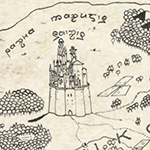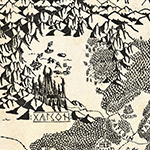
The stone city of Uldar is, in a sense, the true capital of the North. If we exclude Valarkagas and Xalgon, then Uldar is the largest and oldest city in this corner of Qurand—and we have good reason not to count those two: Xalgon is a dark city inaccessible to the People of Light, and Valarkagas is a hermetically sealed “forbidden city” that vigilantly guards the racial purity of its visitors and inhabitants. Uldar, therefore, serves as the center of culture, trade, and peaceful politics for the northern lands. Despite its boisterous military past, it is currently regarded as a safe haven providing ample opportunity for many a venture, thus attracting visitors and travelers from across all of Qurand.
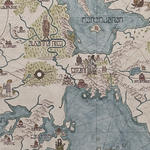
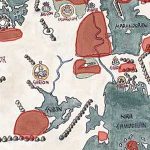
Uldar is a land between two rivers, a safe and protected corner amidst a multitude of wild places. Perhaps only the plains of Autun, lying to the southwest, can be considered a relatively mild region. The wilderness surrounding Uldar, however, is not always hostile—it is simply wild, with all that entails. To the east, beyond the mountains, a tireless wind whistles over the surface of the cold Maranudran; to the west lie the fabled northern forests; to the south, beyond the river, rise the inaccessible woods of the High Elves; and to the north towers the terrifying Kaal Charmat mountain range, into whose shadows mortals do not venture. It is no wonder, then, that the Uldarians cherish their safe home landscape of rolling meadows and groves, and that they guard it vigilantly. The constant proximity to uncivilized lands has bestowed upon the Uldarians a peculiar blend of toughness and kindness, naturally befitting the guardians of the “last homely house.”
The City
Uldar is one of the few human cities not built upon the foundations of Elven or Vezanian settlements. It is a city founded by Northmen in the spirit of human traditions and is therefore reflective of human nature, with its entire mixture of kindness and harshness, practicality and manual creativity, selfish enterprise, and social conviviality.
Legend has it that the city was established on a clearing between the rivers based on a prophecy by the wise seeress Sovnehilda, who accompanied the first northern king, Herjomann. The king desired a challenge worthy of his courage, and the Seeress said that a true challenge is one that leaves an eternal mark on the memory of men, and that the king would achieve this only if he caught one of the animals of the Wild Hunt. Her words confused the king, for he knew well that the Hunt consists of hunters, not prey. Nevertheless, he took her advice, and at the winter solstice, he came upon the trail of the Hunt and set out to pursue it. After many hardships, he trapped one of the giant wolves that serve as hounds in the hunt. It is said that at the touch of the king’s hand, the wolf grew tame and took on the form of a beautiful woman. The king took the wolf-woman as his wife and founded the city of Uldar on the spot where he caught her.
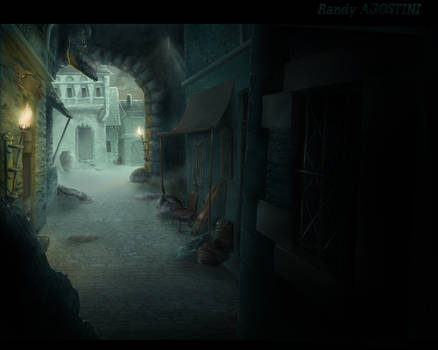
Siranian historians hold a somewhat more prosaic view of the city’s founding. They believe the legend is a fabrication and that the fertile and well-protected plain between the two rivers served the first northern kings as a winter camp. There they would return from their summer raiding expeditions to feast throughout the winter, drinking immoderate amounts of mead and enjoying the company of plundered slaves. Over time, the regular winter banquet necessitated permanent dwellings—first wooden halls and palisades, and eventually stone buildings.
Today, the city is built entirely of massive stone, the work of King Taihun X. Legend says that trolls built the city for the king as a favor in return for his promise to forever preserve the sanctity of their grove, Ugur Saganna, and to halt human expansion so they would always remain at a respectful distance from the troll forest. Historians doubt this account, believing instead that the city was built primarily by slaves brought from the south.
Government
The city was founded and built by powerful kings, but their era has long since passed. Centuries ago, clan leaders and powerful Jarls rebelled against the tyrannical Taihun XIII and, with the support of the people, overthrew him. Since then, the city and the land have been ruled by a Council comprised of both nobles and representatives of the burghers. Every five years, the Council elects a trio of rulers—the Mistron, the Vladyka, and the Priest—who decide on matters requiring immediate action and answer to the Council. The Mistron oversees trade, taxes, and the health and prosperity of the people; the Vladyka is in charge of defense, construction, and territorial issues; and the Priest manages the calendar, holidays, cult, education, and foreign contacts. It is an open secret regarding the Uldar government that the Arch-Guild has purchased the majority of votes in the Council.
Tento text o kamenném městě Uldaru vykresluje obraz nejdůležitější civilizační bašty na dalekém Severu. Překlad do angličtiny zachovává historizující styl, který kombinuje legendy s pragmatickým pohledem historiků.
Uldar
The stone city of Uldar is, in a sense, the true capital of the North. If we exclude Valarkagas and Xalgon, then Uldar is the largest and oldest city in this corner of Qurand—and we have good reason not to count those two: Xalgon is a dark city inaccessible to the People of Light, and Valarkagas is a hermetically sealed “forbidden city” that vigilantly guards the racial purity of its visitors and inhabitants. Uldar, therefore, serves as the center of culture, trade, and peaceful politics for the northern lands. Despite its boisterous military past, it is currently regarded as a safe haven providing ample opportunity for many a venture, thus attracting visitors and travelers from across all of Qurand.
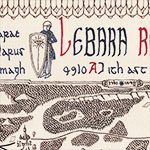
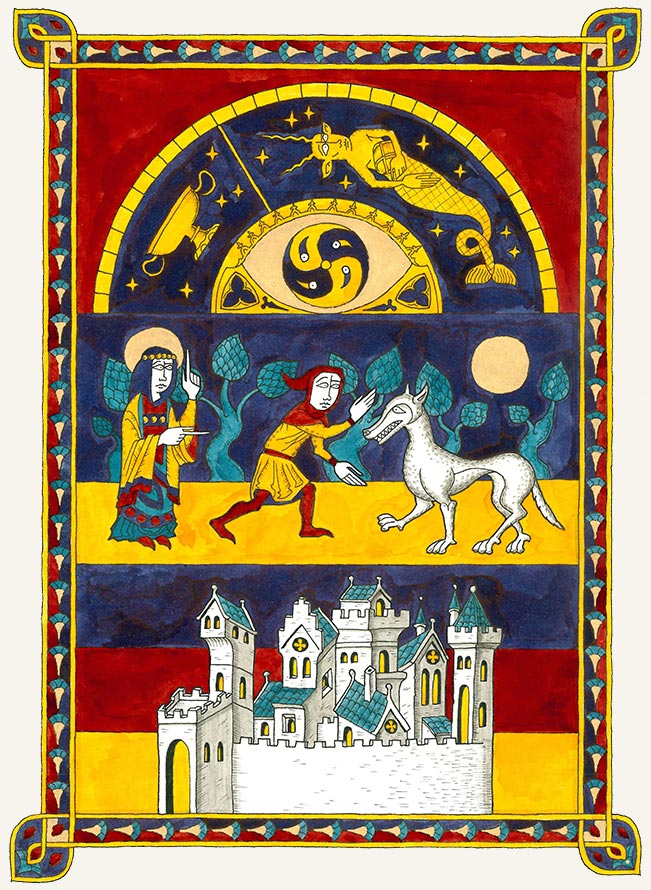
Illumination from page 22r of manuscript 887 ESrg fol. (The Maghon Codex) from the Imperial Library in Sirgon. The codex contains miscellanea and many pages of text that scholars believe to be the first seed of what would become the Sirgon Encyclopedia a century later. The texts are accompanied by illuminations from the same school found in the manuscripts of the Saga of Lundir, though characterized by greater detail and ornamentation. The present scene depicts the founding legend of the city of Uldar: the seeress Sovnehilda and King Herjomann.
Uldar is a land between two rivers, a safe and protected corner amidst a multitude of wild places. Perhaps only the plains of Autun, lying to the southwest, can be considered a relatively mild region. The wilderness surrounding Uldar, however, is not always hostile—it is simply wild, with all that entails. To the east, beyond the mountains, a tireless wind whistles over the surface of the cold Maranudran; to the west lie the fabled northern forests; to the south, beyond the river, rise the inaccessible woods of the High Elves; and to the north towers the terrifying Kaal Charmat mountain range, into whose shadows mortals do not venture. It is no wonder, then, that the Uldarians cherish their safe home landscape of rolling meadows and groves, and that they guard it vigilantly. The constant proximity to uncivilized lands has bestowed upon the Uldarians a peculiar blend of toughness and kindness, naturally befitting the guardians of the “last homely house.”
The City
Uldar is one of the few human cities not built upon the foundations of Elven or Vezanian settlements. It is a city founded by Northmen in the spirit of human traditions and is therefore reflective of human nature, with its entire mixture of kindness and harshness, practicality and manual creativity, selfish enterprise, and social conviviality.
Legend has it that the city was established on a clearing between the rivers based on a prophecy by the wise seeress Sovnehilda, who accompanied the first northern king, Herjomann. The king desired a challenge worthy of his courage, and the Seeress said that a true challenge is one that leaves an eternal mark on the memory of men, and that the king would achieve this only if he caught one of the animals of the Wild Hunt. Her words confused the king, for he knew well that the Hunt consists of hunters, not prey. Nevertheless, he took her advice, and at the winter solstice, he came upon the trail of the Hunt and set out to pursue it. After many hardships, he trapped one of the giant wolves that serve as hounds in the hunt. It is said that at the touch of the king’s hand, the wolf grew tame and took on the form of a beautiful woman. The king took the wolf-woman as his wife and founded the city of Uldar on the spot where he caught her.
Siranian historians hold a somewhat more prosaic view of the city’s founding. They believe the legend is a fabrication and that the fertile and well-protected plain between the two rivers served the first northern kings as a winter camp. There they would return from their summer raiding expeditions to feast throughout the winter, drinking immoderate amounts of mead and enjoying the company of plundered slaves. Over time, the regular winter banquet necessitated permanent dwellings—first wooden halls and palisades, and eventually stone buildings.
Today, the city is built entirely of massive stone, the work of King Taihun X. Legend says that trolls built the city for the king as a favor in return for his promise to forever preserve the sanctity of their grove, Ugur Saganna, and to halt human expansion so they would always remain at a respectful distance from the troll forest. Historians doubt this account, believing instead that the city was built primarily by slaves brought from the south.
Governance
The city was founded and built by powerful kings, but their era has long since passed. Centuries ago, clan leaders and powerful Jarls rebelled against the tyrannical Taihun XIII and, with the support of the people, overthrew him. Since then, the city and the land have been ruled by a Council comprised of both nobles and representatives of the burghers. Every five years, the Council elects a trio of rulers—the Mistron, the Vladyka, and the Priest—who decide on matters requiring immediate action and answer to the Council. The Mistron oversees trade, taxes, and the health and prosperity of the people; the Vladyka is in charge of defense, construction, and territorial issues; and the Priest manages the calendar, holidays, cult, education, and foreign contacts. It is an open secret regarding the Uldar government that the Arch-Guild has purchased the majority of votes in the Council.
The Arch-Guild
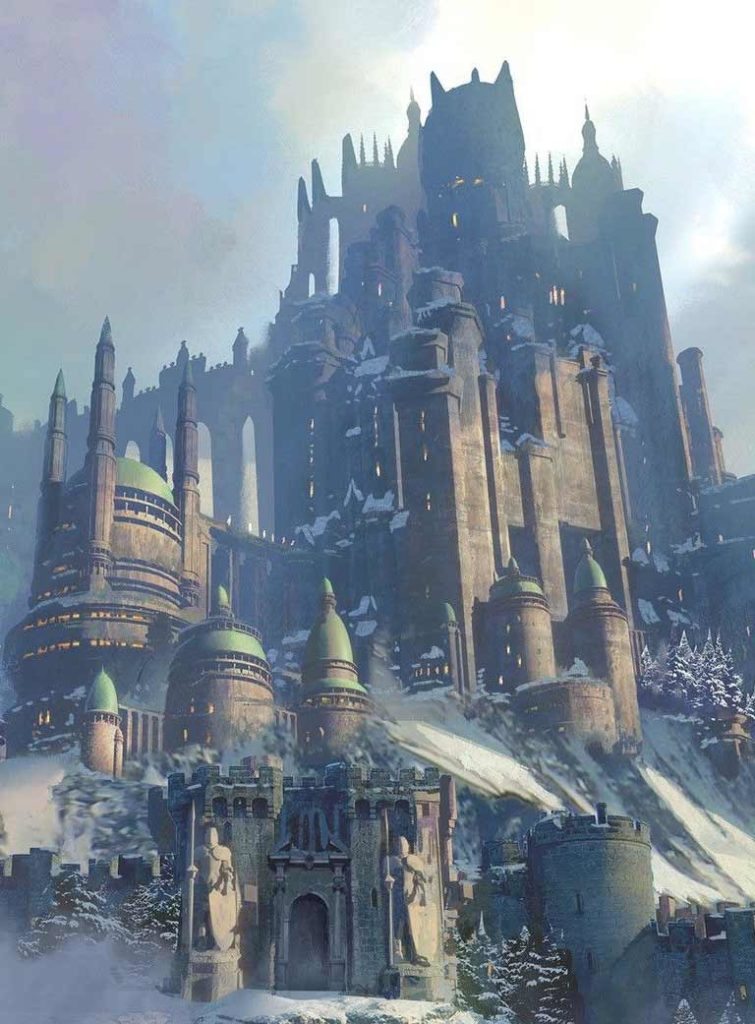
Many merchants, craftsmen, and experts in the lands of Qurand organize themselves into guilds and brotherhoods. One guild, however, surpasses all others in power and influence, stretching across many cities of the North and West. It is not by chance that this guild is called the Arch-Guild. It unites a number of smaller guilds and possesses a very firm and complex hierarchy, not unlike knightly or magical orders. The Arch-Guild has offices and branches in practically every city of the North, with the exception of Valarkagant (the Arkins of Valarkagant do not trust the Arch-Guild and refuse to let its representatives within their sacred walls). Naturally, the Arch-Guild also has offices and buildings in Garion, the Free Land, and all the large cities of Sirania.
In Sirania, however, its influence is diminished by competitive struggles with local guilds, which are actively supported by the Empresses and receive many privileges from them. The Masters and Grandmasters of the Arch-Guild possess power equivalent to princes and kings, and many lesser and greater kings are essentially at their economic mercy. Mutual territorial disputes and distrust among the rulers of various lands prevent them from effectively and collectively resisting the Arch-Guild, leaving individual kings of smaller countries more or less defenseless against its pressure and influence.
Historically, Uldar is the core and original operating ground of the Arch-Guild, and here its power is by far the greatest. A large part of the city belongs to this guild. The wealth and influence of the Arch-Guild are not entirely negative; through its care, many magnificent Uldarian houses have been built that also serve the people. Furthermore, the Arch-Guild usually uses its influence to force rulers toward peace, as trade flourishes better in times of peace.
The Uldar Knights
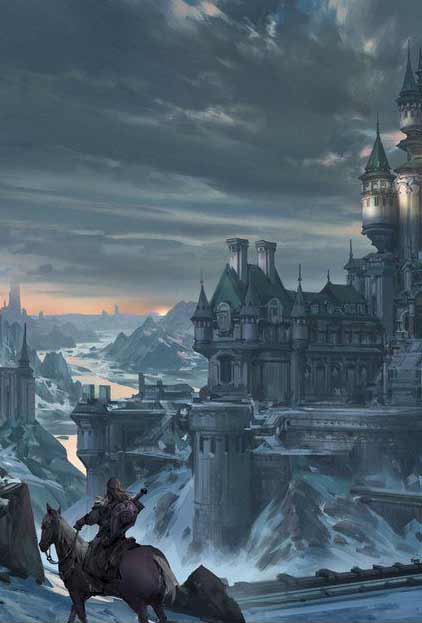
The Order of Uldar Knights is one of the pillars of peace and security in the northern lands. Unlike other orders, the knights do not have a strong and persistent piety at the center of their ideology; instead, they develop the ancient values of northern warriors: generosity, the sanctity of one’s word, courage, and practical wisdom. The knights are sometimes viewed with suspicion by other orders because they do not turn to any specific deity to establish their legitimacy. Invoking the gods is not forbidden to Uldar Knights, and many do so according to the customs of their families and clans, but many believe in their own power and strength. This belief is not self-centered narcissism, but a simple assessment of the situation: that ultimately, a warrior must find hidden strength within themselves and face adversity as a hero.
Nevertheless, the Uldar Knights do possess a kind of spiritual doctrine, which they preserve and remember in the form of ancient verses that serve as a moral compass in complex situations. It is precisely due to their reliable knowledge of these ancient verses that the knights of this order are considered equal to judges within the territory of Uldar and in several other northern lands. Common folk always have the right to appeal to an Uldar Knight instead of a local judge, and their verdict is respected throughout the land. In the realm of magic and spells, the knights base their power on the knowledge and carving of runes. Here, they are often called upon by commoners for healing and protection, and are sometimes preferred over local rune-smiths because they are considered independent and of high character.
Uldar University
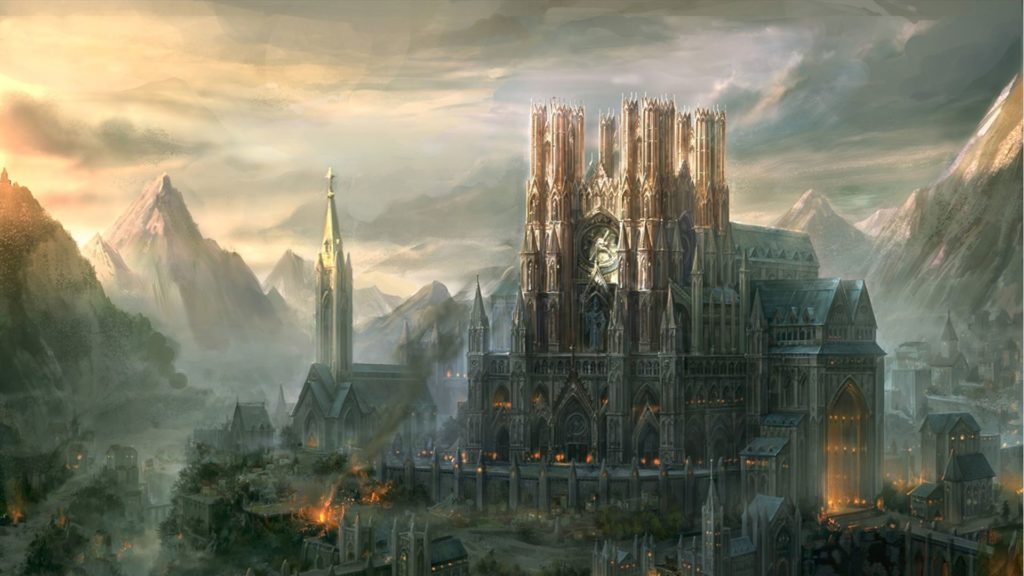
Uldar University is the northernmost university on Qurand. Its campus forms a separate entity within the city walls and is separated from the rest of the city by a high, massive wall. Despite the general reputation of Northerners as a people not particularly cultured or sophisticated, Uldar University enjoys an excellent reputation, and many scholars come from afar to teach and research within its walls. At the same time, as the northernmost seat of learning, it is a place where many herbalists, naturalists, and researchers come to collect and study specifically northern herbs and fauna, as well as wild tribes and their traditions. The university also includes a Faculty of Magic, which boasts the largest number of runic experts on Qurand. It was the Erils, the masters of runes, who inscribed these powerful signs into the walls and gates of the university, making it an exceptionally safe sanctuary against both human and magical forces.
The term “academic ground” therefore carries an even stronger resonance in Uldar than in other parts of the world—no unauthorized person can physically enter it, and no violence can occur upon it. For this reason, Uldar University has long served as a secure repository for all commercial and administrative documents, contracts, deeds, and wills, as well as a reliable treasury for a number of banks and institutions, including the powerful Arch-Guild. People persecuted or threatened often find refuge on the university grounds, where their pursuers cannot reach them. Exceptionally, this also applies to people accused of a crime and fleeing from the law. According to age-old custom, in such a case, it is judged that the person was accused unjustly and that they deserve their freedom.