The Divine Folk refers to various races of beings who are of similar origin to the gods or are their progeny; in short, those whose souls and essence differ from the human and who are, therefore, representatives of world forces and inhabitants of the mysterious planes beyond the boundaries of ordinary days. They often gather around the gods to whom they are kin, forming their retinue and serving as their disciples and guardians.
The Azharians
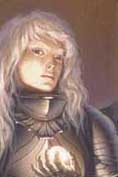
The Azharians, or the People of the Azhars, are like a thousandfold swarm of tiny sparks fluttering around the central flames of the three Great Radiant Ones. Like them, they clothe themselves in bodies, which are reflections of their nature. Just as humans die and are born, the Azharians have the ritual of Renaming. During this ritual, they symbolically die, bid farewell to their previous parents, and are then symbolically born to the joy of their new parents, receiving a new name. In time, they also ritually accept children and become parents themselves.
A new name is to an Azharian what a new body is to a human; the moment they acquire it, much changes in their carriage and appearance, though they still harbor a general and “grey” memory of their past lives and former names. What may appear to an outside observer as mere play is strictly observed by the Azharians themselves; one who has changed their name is considered a new person, even though everyone knows who their predecessor was. Among them, instead of saying “This one died/was born,” it is customary to say, “This one changed their name.”
Regarding appearance, to humans, the Azharians usually appear as beings of immense beauty in human form, only more noble—though in a specific way, unlike the nobility of Elves or high-born men. Their skin is often like ivory, and their eyes possess the unmistakable color of a deep violet-blue sky. This color is known as Azharian Blue. In strength, power, and all else, they surpass the human race; above all, their bodies are entirely resistant to aging and endure wear and injury remarkably well. A unique trait of their appearance is that their “Azharian-ness” can be more or less present; thus, their look can transform in a brief moment from an ordinary person, greyed by the world, into a radiant divine being, simply by the stirring of their inner light.
The Azharians are the only ones who form the Maghavan Order of Azharnant—the highest and seldom-mentioned order, whose participants can only be Azharians. Just as the color of the Gandharnant school is blood-crimson and red gold, that of Aiurnant is dark turquoise and diamond, and Kirlanant is misty green and grey true-silver, the robe of Azharnant is whiter than snow and its metal is adamantium. Only a few members of the order remain in the depths of the cosmos today, for it was from their ranks that the most Pilgrims departed, and many of them are said to have reached the goal of their Pilgrimage with a single step into the Void.
Just as pure light refracts into colors, the Azharians gave rise to several different nations, each taking only a portion of their nature and power while leaving the rest to their kin. In the first division, two nations arose—the Gandharvas and the Apsaras—whose talents are still vast and whose nature is magical. However, in power, wisdom, and essence, they stand below the Azharians; although they manifest their strength more frequently than their ancestors, their reservoir of power is narrower.
As lava flows from a glowing vent and gradually solidifies and cools, becoming more and more like stone, so too the talent and power of the Azharians gradually cooled as generations followed generations. While near the divine source stand radiant beings of fluid contours permeating worlds, the more distant the generation we observe, the more ordinary, firmly contoured, and human-like the being we find. The quieter the primordial fire within them becomes, the more clearly they are settled in the gross-material world of solid Qurand, and the more immovably they are part of their physical shell.
And so, after the Gandharvas come the Gandharans, who are already a nation like any other, only dimly aware of their ancient purpose. Similarly, the Dryads arose from the Apsaras, and they too have immutable bodies to which their souls are firmly bound. Their kinsmen are the Archaics, who, unlike the Dryads and Gandharans, arose directly from the Azharians. They allowed no other nation to spring from them due to their deliberate isolation and a strong adherence to the “barbaric” nature of their ancient past, which their elders have never forgotten.
Elves
When the primordial energy organized itself and found its most beautiful form, this form had eight axes. These axes are called the Unborn. They are forces rather than beings and transcend everything we know as personality, yet they possess character. When the Age of Silence was destroyed and the Unborn forever lost that in which they found the most fullness, they resisted the new order. They joined together, and from these unions arose the descendants of their greatness—the Firstborn, the forefathers of the Elven race. It was the Firstborn and the Secondborn, their descendants, who still possessed much of what was inherent to the forces that sired them, and thus they created their people.
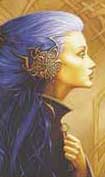
Because the Firstborn did not arise from the union of two or more Unborn but were latent in the “interspace” from the beginning, they were immortal just like their progenitors. Knowing no beginning, they knew no end—unlike humans. Their descendants, the Secondborn, were similar to them in every way, only smaller and weaker in all aspects; however, the Firstborn had a great desire for procreation, and thus the hosts of the Secondborn were considerable.
The descendants of the Secondborn, however, were already too diminished in their latency. Thus, although they knew no natural death, they could lose their physical shell and die. It then depended only on the strength of their will or emotion whether they could return among the living or vanish into the latency between the power nodes of the Firstborn and Secondborn. These descendants of the Secondborn were called Elves, later High Elves. The later the generation an Elf belonged to, the less they possessed of the power and mystery of their ancient root. The youngest among them today are the Grey Elves, who are very close to the common human.
However, only the Firstborn and their sons and daughters are counted among the Divine Folk, for they are in many ways similar to their gods, and their paths lead far from the trails of ordinary men.