A Report for the Sirgon Academy by Field Researcher Anox Nan Silur
The mysterious figures of the Seers are a unique phenomenon of the Western world and a constant fixture in its culture, history, and legends. They roam primarily the forested realms of the North and the populous kingdoms of the West; it is a tradition of many thrones there to have their own Seer. It is a remarkable fact that Seers almost never venture further east than the Free Land. Given that these Seers function as royal advisors across generations, some wield immense influence over the long-term politics of many kingdoms lying west of the Empire. Their influence is so undeniable, though subtle, that we believe the Imperial Academy must be informed of their nature. We expect this report to be groundbreaking, as we have yet to find a more comprehensive treatise in the Sirgon Library.
At the outset, a fundamental fact must be admitted: no one knows where the Seers came from or what their origin is. Most of their number entered the human world many centuries ago, and no one remembers them as youths, let alone children. Nevertheless, through diligent research, we have discovered that three known Seers were born in historically documented times—approximately 170 years ago. Though we remain uncertain if this is a case of “human birth as a specific divergence” (see below regarding the specific traits of the triads), we shall venture a generalization based on their case:
Seers are born marked—some with white hair, others speaking foreign tongues soon after birth; many bear a birthmark in the shape of an eye. Even in childhood, they possess the minds of adults. They are often born in remote places, the wilderness, or primitive tribal societies. They are either cast out by their tribes (growing up alone in the forests) or, conversely, revered as shamans.
Of all known Seers, the following is certain:
They possess superhuman strength of mind and body, learning anything—combat or magic—with startling speed. Their memory is seemingly boundless. Beyond the spells they master through study, they possess a unique inner power capable of wonders; thus, in learned circles, they are identified with the Thaumaturges—the legendary Wonder-workers.
Above all, they have the power to behold things others cannot, which is why they are called Seers. They possess visions and prophetic dreams. It is said they live in a world larger and darker than that of most men. Their visions are never false, as confirmed by generations of kings who have used their services.
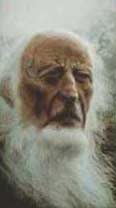
A Seer possesses a human body that must breathe and eat; if it is too heavily damaged, the Seer will depart from it. Where a Seer differs from most humans in bodily function is that they do not require sleep. On the contrary, sleep is undesirable for them most of the time. Unlike us, a Seer does not enter the world of dreams upon falling asleep, but rather a terrifying world of visions and prophecy, whose message they can only receive if prepared.
Concerning the personal power of the Seers: Every Seer carries a fiercely burning life force—an unknown essence that is a self-sustaining creative energy. This power resides primarily in the eyes, the voice, the breath, and the hands. A Seer has the power to heal, command, lead, or kill through their gaze or voice. Furthermore, every Seer is the guardian of two specific powers: Blessing and Curse. A Seer’s Blessing resides in their right hand, and the Curse in their left. A Seer’s Blessing is irrevocable and unique, as is the Curse, haunting its target forever. Seers are reluctant to use these powers; on one hand, it utterly exhausts their life force, and on the other, it only brings more strife and divergence into the world. A Seer who has expended both their Blessing and Curse becomes a weak, withered old man whose days are numbered.
It is also said that Seers use the services of animals and birds as often as human societies. A Seer learns the speech of beasts with the same diligence as human tongues, eventually mastering it.
Before reporting on individual Seers, we quote the famous adventurer Falmar Garion Gonari, who met several Seers in person:
“They are not of human race; that much is obvious to anyone who looks past their learned gestures to see the true nature of their actions. Human habits, speech, and customs are alien to them by nature, yet they learn them with such precision that they command them better than the humans from whose hearts they first sprang. They are strangers here—exiles from unknown lands. Yet they study everything with the interest and compassion of an independent observer.
They never truly become part of a culture; they remain forever foreign. Perhaps only the landscape of dreams is their own; they return there from time to time, but rarely, as if fearing they might one day find their homeland ravaged by an unknown plague.”
Before we dwell specifically on some of the most renowned Seers, we must mention a fact that we have uncovered with surprise after years of research: Seers do not come into the world as individuals, but always form triads. Each of these triads possesses certain common traits that clearly distinguish it from the others. It also appears that true friendship and a brotherly bond exist only within such a triad; its members understand one another more deeply than any other alliance of men. Yet, existing as a triad is merely a prerequisite for intimacy, nothing more; thus, many Seers—even within their own triad—dwell in an enmity as fierce as that which can only arise between the closest of kin.
The Triad of Leaders differ from other triads by being the heads of powerful Orders, serving as overt leaders of Men and Elves. They are also known for walking the world in the guise of common druids or knights to remain in contact with the common folk.
Zodiac, also called the King of Animals or Lord of Beasts, he is the eldest and foremost of the Zoomorphs—mages who have entered the animal realm, mastered their tongue, and can assume many inhuman forms. He is known for his affinity for great predators and a restless nature seemingly untouched by the ages.
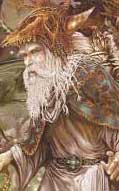 Ocelot, the current Grand Master of the Order of Palladins and the High Priest of the god of Order, Pallas. He is a stern man who leads the Order with a firm hand. Yet, he is the one who most often sheds his ornate priestly robes to wander the world in the battered armor of his novitiate.
Buckhorn, The Druid King of Qurand, a figure shrouded in myth. His palace is said to be a mystical Tree, and his paths are its branches, which legends say span across the entire world. His leadership is invisible, and his name does not stand openly behind every deed of the druids, yet the wise know that nothing happens within the Forest that He does not know.
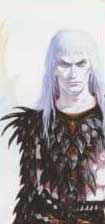
The Triad of Warriors: This triad is exceptional in several ways. Firstly, they are the only triad born in historical times. Secondly, they are neither advisors nor leaders, but wander the Western lands freely, without home or obligation. All three are capable mages, but primarily knights of the Order of Palladins. They hail from wild forest tribes of the Free Land, meaning each has a guardian spirit, and their attire bears traces of savage ways. They are renowned among kings and princes for their martial expertise, and as such, they are hired from time to time to lead armies into battle and to secure victories for their sovereigns.
Alqisaintir, called the White Eagle: Clad in white Palladin armor stylized in the Gandharan fashion to resemble the plumage of a bird of prey. His cloak is made of actual eagle feathers, and he wears an eagle mask in battle. His eyes are sharp like an eagle’s, and much of his life force is said to flow from them.
Ulinen, called the Grey Owl: Clad in grey Palladin armor with scales stylized as feathers. Her cloak is made of silent owl feathers. She is a predator no less dangerous than the Eagle. Unlike her brothers, she is less of a lonely wanderer and is often accompanied by a group of friends who left the walls of Palladin fortresses with her.
Ramartak, called the Black Raven: Clad in black armor of steel feathers. Like his siblings, his gaze holds a commanding power, but his voice is even stronger. His domain is the night and winter, and despite an appearance that may inspire fear, he is sought after for his wisdom.