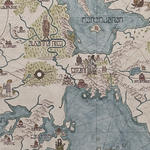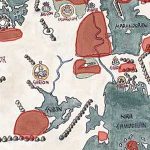
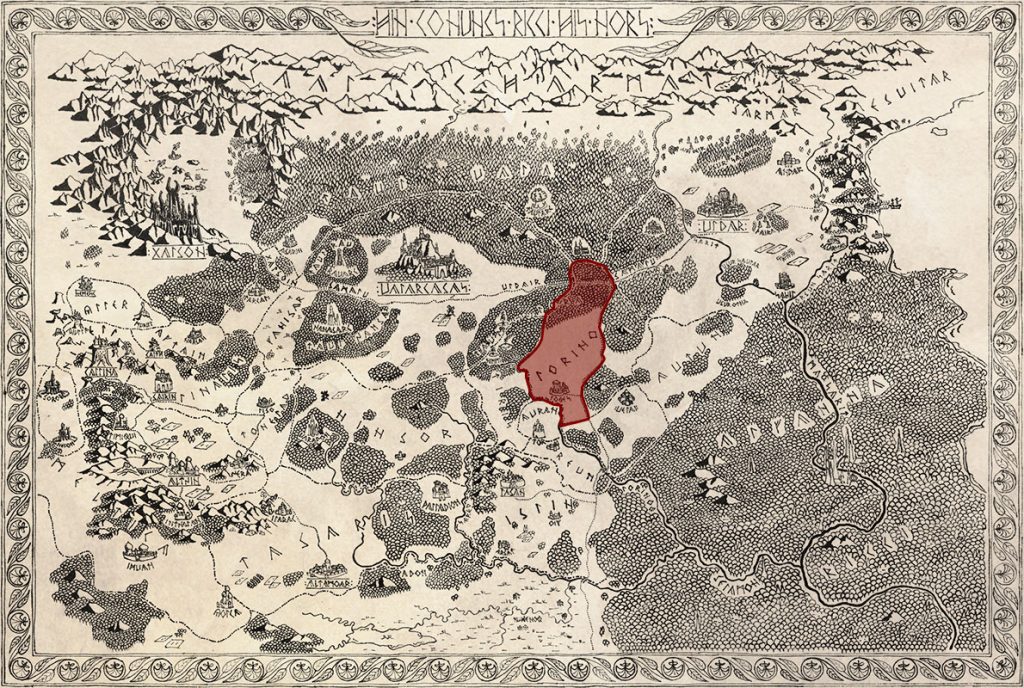
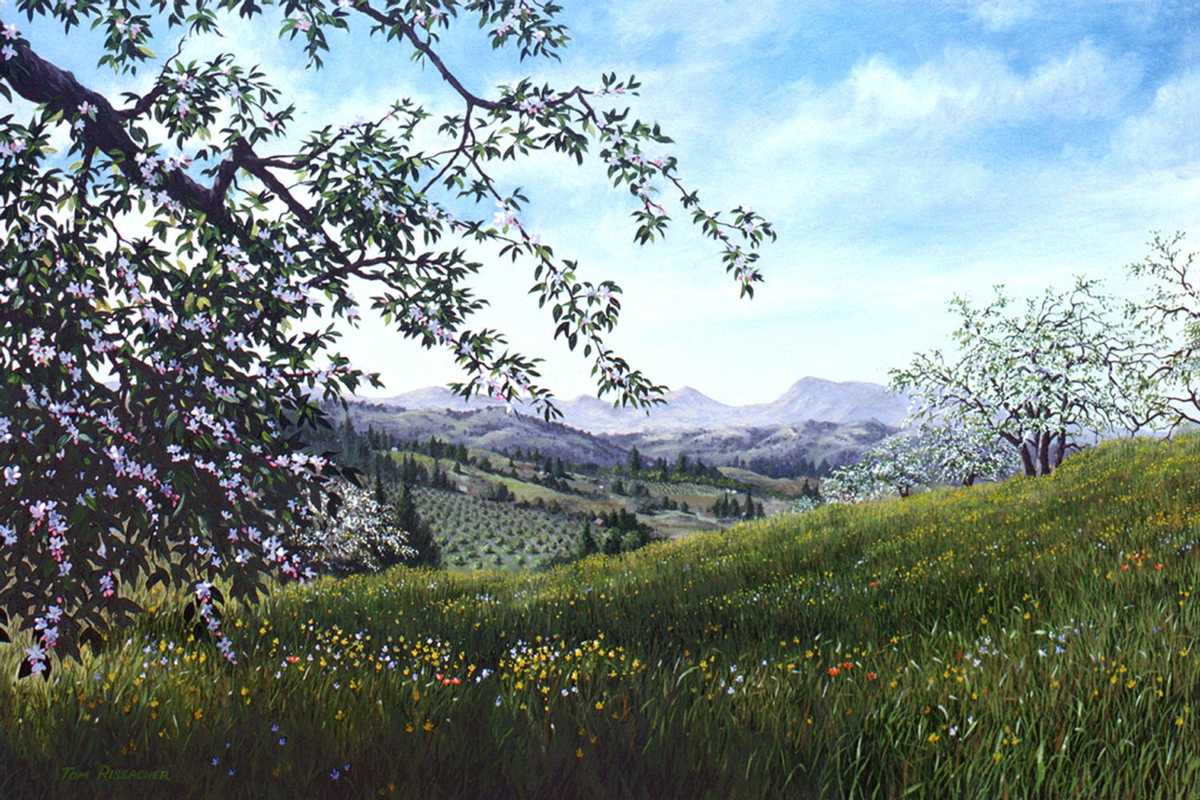
Lorino, also known as the “Kingdom of Versifiers,” is a truly unique land—not for its natural features, but for the extraordinary culture of its inhabitants. The Lorins are a relatively small folk living in a picturesque landscape of orchards, fields, and groves between the Lorinoq River to the south and the Great Forest to the north.
Lorino has earned a wide array of nicknames, ranging from the one mentioned above to the “Kingdom of Half-Elves” and even the “Kingdom of Women.” The Lorins are sometimes perceived as half-elves because the men naturally do not grow beards, and both men and women generally possess a delicate build and fair features. The question of their origin, however, is shrouded in mystery, as the Lorins themselves maintain no proper historical records; instead, they possess a deluge of clearly unrealistic epic poems filled with soaring poetics and metaphors.
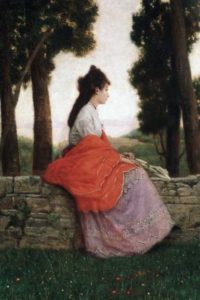
The name “Kingdom of Women” is applied to Lorino because, to an outside traveler, it appears as if the Lorins are a nation of ladies-in-waiting. Indeed, Lorin men and women dress and groom themselves in the same style—one that is highly aesthetic and fae-like. Differences in attire are simply not determined by gender, but rather by the type of poetic genre a given Lorin prefers and their affiliation with a specific poetic guild. Even the language does not distinguish between male and female. There is only a special term for “mother”; otherwise, everyone is simply a “Lorin.”
A typical element of Lorin clothing is the corset or a similarly emphasized narrow waist, as the Lorins are quite literally obsessed with a slender silhouette. Lorin garments are among the most beautiful on Qurand, and for a Lorin, clothing ranks alongside musical instruments as their most vital possessions. In contrast, Lorin architecture is relatively simple and purely practical. Even Lorin peasants and orchardists look like princesses—it is quite common to see a Lorin girl dressed in a magnificent gown carrying water from a well in a bucket (or even bricks for construction) balanced perfectly upon her head.
The primary cultural asset of the Kingdom of Lorino is poetry. Lorinian is a language with a complex grammar, a fixed feature of which is several types of rhyme. In practice, all Lorins speak in verse. The type of verse expresses whether one is speaking of the past or the future, whether it is a question, or whether a statement is meant figuratively or ironically. Different types of verse also denote various dialects and social standings. Beside poetry, the Lorins are also talented musicians. The voices of both men and women are pitched almost equally high and possess a greater range than the average human voice. The Lorins literally live through music and poetry, and thus they far surpass neighboring nations in these arts (with the rare exception of gifted individuals). Their lyrical and epic poems are spread both by word of mouth and through the presence of Lorin bards at many royal courts.
Among themselves, they compose immensely complex poems in Lorinian that no outsider can understand. However, due to their linguistic talent, most successful Lorin bards are multilingual and know exactly how to cater to the tastes and demands of audiences in various world languages. Thus, they function to a large extent as authors of propaganda and cultural works according to the requirements of this or that patron. This includes all manner of celebratory poems for rulers, adventurous epics about popular heroes, epigrams targeting political opponents, and lyrical songs that cause the heart to ache.
Lorin culture also has its darker sides. It is so afflicted by its ideal of beauty—which includes not only a lovely appearance but also zero excess weight—that people born with an unattractive face, a physical defect, or those who cannot rid themselves of obesity are so ridiculed and ostracized that in most cases they end up in voluntary exile, or frequently commit suicide during adolescence. Having a “belly” is so unacceptable that special buildings outside human settlements are prepared even for pregnant women, where they withdraw as soon as their pregnancy is visible and where they give birth. Only when they return to their original form can they rejoin society. This is but one example of a whole array of Lorin peculiarities regarding their body culture.
Besides poetry, the land of Lorino itself has two main products: Lorin peaches and silk. Both have been bred to perfection over ages. The Lorins are not particularly skilled farmers, but they are renowned orchardists. Alongside their famous peaches, they grow apples, sour cherries, and plums, producing far more than they consume. Silk production is their very closely guarded secret, the main source of state income, and the reason why the Lorins themselves are so beautifully arrayed.
As for the military, the Lorins rely on a defense pact concluded with the Order of Uldarian Knights. In exchange for protection, the Order receives a portion of Lorino’s fruit exports and, crucially, has the deeds of the Uldarian Knights extolled in celebratory poems. As a result, the Order is famous far beyond the borders of its actual power and influence. It is a very well-functioning symbiosis. On a psychological level, it also plays a role that the knights see the Lorins as a sort of ideal, fragile ladies whom they can protect from danger. The only thing that somewhat unnerves the masculine hearts of the northern warriors is the fact that roughly half of those “ladies” are actually men.
The Lorins have a very warm relationship with their otherwise quite different neighbors from Autun, as both nations are very peaceful and are certainly not a threat or competition to each other. The romantic Lorins admire the Auduns and idealize them as “wise savages,” while the Auduns see the Lorins as the least insufferable of their human neighbors.
The King of the Lorins is Sileutar, elected in his youth for the wisdom of his poems, and his seat is Loqes, the only large Lorin city. King Sileutar’s advisor is the mute Seer Munath, ironically nicknamed “The Orator.” Munath signals his advice only with a gesture of agreement or disagreement. If more is required, he carves his words into stone.