Who dares to speak its name aloud? Few are those who know the circumstances of its origin, its meaning, or its purpose. The word itself is said to mean nothing more than Time-Machine or Clock-Mender, yet in the opinion of others, its true meaning is Dread-Lying. In this view, the Horologium is a keyhole through which one may peer into the Abyss, where the Lie remains coiled like a serpent, awaiting its summons.
Others claim that the nature of the Horologium is best revealed by another of its names: the Orloj. It is the machine of the dark Eagles (Orli), which is but another name for the terrible Ravenheads—beings from the Abyss. Their feathers are black and oily not by nature, but because they toil tirelessly at the gears of the hidden machine, lubricating it with a thick oil distilled from the pitch-black subterranean lakes of the liquefied bodies of ancestors.
But what is the Horologium? And what is the tale most often told of it?
In Xalgon, it is called the Machine of Restoration. It is said that the world was broken by the rebellion and pride of created beings, falling into sin and iniquity. These rebels gained support from the Outside—from the Void—and cast the Lord and Creator, the One and True, into the Abyss behind the Deep Mirror, where He remains bound and imprisoned. Yet, a handful of the faithful remained on Qurand under the patient guidance of the wise Zilaths, their goal being the Great Restoration. The world still retains much of the order instilled by the Creator, but the self-will and pride of beings have shaken it loose from its rightful form. This misalignment is the very barrier preventing the Creator’s return. The Horologium is a machine of immense complexity and craft—a microcosmic model of the world. Through the magical forces of sympathy and resonance with all Creation, it can manipulate and shift the world from its corrupted state toward an ideal one, until finally, “the stars are in their right places” and the Creator returns.
In Sairis, the Horologium is called the Doomsday Engine. Long ago, the dread Baoth created the world as a dark prison for souls, intended to perform an eternal play for his amusement. But he miscalculated; the souls possessed more strength and will for freedom than he was prepared for. With the aid of the Lightbringer and other benevolent powers, humanity ended Baoth’s tyranny and imprisoned the jailer himself in the Abyss. Baoth lurks beyond the borders of the cosmos, and only here and there does his shadow—known as the Star Eater—creep into the world through cracks in the fabric of reality. The Horologium is a terrifying mechanism embodying Baoth’s original vision of the cosmos as a clockwork engine that draws its energy like a vampire from the blood and life of the pure souls harnessed within it. The Horologium does not measure time; it metes it out, creating it and pouring it into the world in ever-increasing quanta, like a vast tide or flood. This is because the order established after Baoth’s exile rests upon the foundations of Being, Stillness, and the Circle, whereas Baoth brings Flux and Change. His future, victorious name is the Lord of New Time.
The archives of the Xalgonian Zilaths are hidden from the people, and thus the full history of the Horologium remains unknown. It appears that a Horologium cannot be built just anywhere or at any time; beyond the immense technical costs, its construction requires “open gates” in the fabric of fate. This usually occurs when the faction of the Azhars, in their eagerness, exceeds their authority, granting the Zilaths a “free move” in compensation.
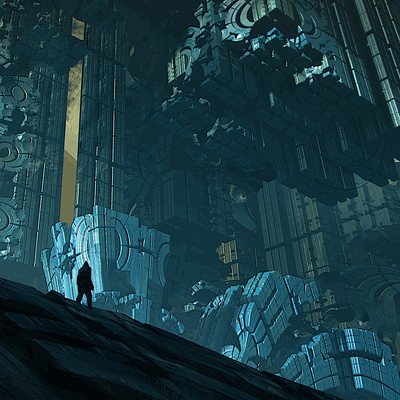
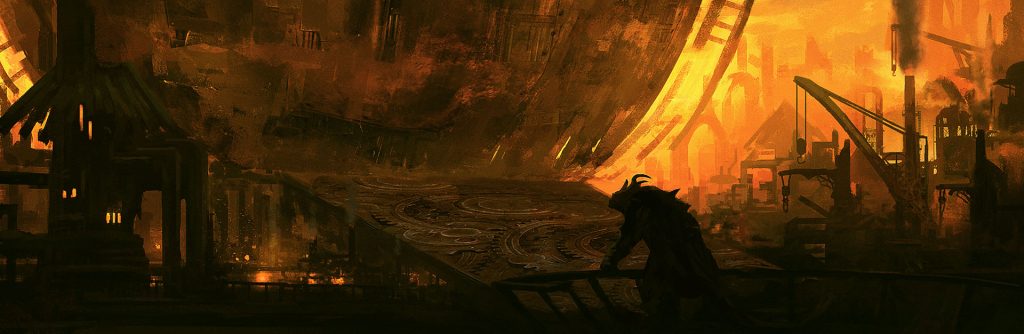
The Horologium is a machine of titanic proportions, resembling a vast, mobile cathedral with many arms and wings of steel and obsidian. In its movement, it is like a knot of geared serpentine bodies dancing a lethal dance with a flock of black-winged stone cherubs. It is the Dark City, the Orloj, the Clockwork. At its heart, its own builder must be imprisoned; otherwise, the machine cannot be set in motion, for the builder’s blood is one of the catalysts for its drive. However, the laws of sacrifice allow for a proxy—a brother, sister, son, or daughter—who shares the blood and to whom the builder is bound by a bond of love.

Records in Sairis suggest three attempts were made to build and activate a Horologium:
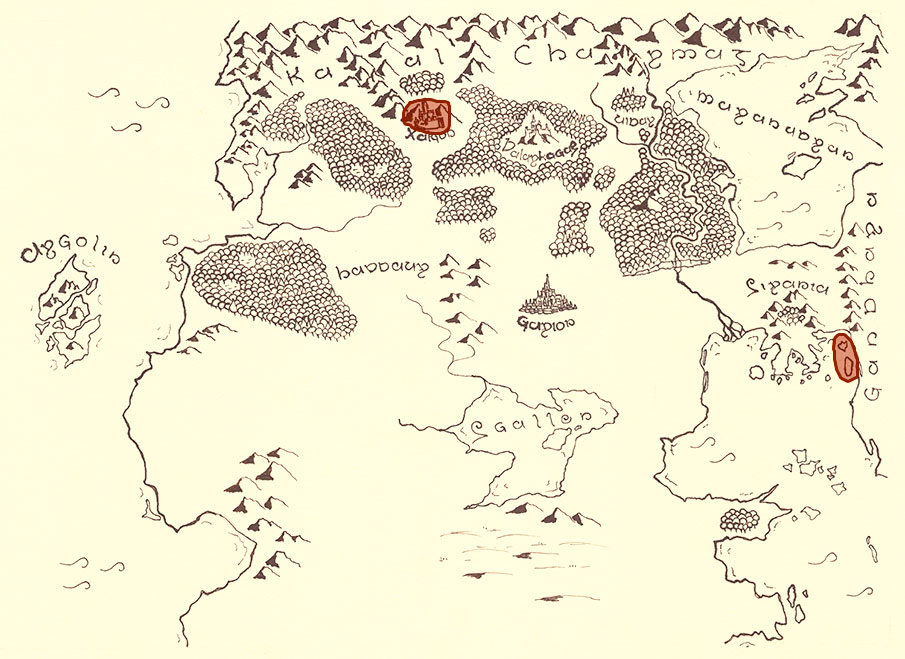
1) The First Horologium was built by Lundir-Me’awar in Xalgon, as told in the renowned Saga of Lundir. The sacrifice was his brother, Valhun-Me’atham. The Horologium ran for many days before Lundir and his companions finally destroyed it and liberated his dying brother from the machine.
2) The Second Horologium was built by Fillard in the undersea depths near Mantrin, or perhaps within Mantrin itself. The sacrifice was Fillard’s son, whose name is unknown. It is not known how long it ran, but it was destroyed by the Maghavans during the Mantrinian War.
3) The Third Horologium was built by Favilla (with Fillard’s aid) on the islet of Tinwil between Vaktar and Mantrin. The sacrifice was Ignis, Favilla’s sister. It ran only briefly before being destroyed that same day by the combined forces of the Gandharan Maghavans and Súlin’s Company.
It must be noted that neither the Xalgonian nor the Sairisian accounts seem to hold the entire truth. The Horologium is an ancient idea with deep roots reaching far beneath the surface. Sairis speaks of it with such loathing perhaps because the city itself is its shadow—for what else is Sairis but a city in motion, an ideal that must also stand upon the personal sacrifice of its builder? The Xalgonians claim their work was to welcome back the Lord, but those who heard the Zilath Luria discourse on the Horologium in the quiet dusk upon the walls of Xalgon heard instead a mysterious poem about the meeting of Stars and Abyss, Time and Timelessness, Eagles and Serpents.